Todos os dias com fibrose pulmonar surge uma nova questão

Uma aplicação gratuita para tudo Fibrose pulmonar que precisas saber, com base na ciência médica e na experiência de outras pessoas, para que não tenhas de descobrir tudo sozinho.

Uma aplicação para tudo Fibrose pulmonar pede-te
Respostas personalizadas antes, depois e entre cada consulta.





O que deves saber sobre fibrose pulmonar
O essencial sobre causas, tipos, sintomas, tratamento e diagnóstico, elaborado com base em diretrizes médicas e revisto pelos nossos médicos internos. Abre as secções que se aplicam a ti.
O que é a fibrose pulmonar?
A fibrose pulmonar é a formação de cicatrizes no tecido pulmonar, em que o tecido saudável e elástico é gradualmente substituído por tecido cicatricial espesso e rígido. Os pulmões ficam com menos capacidade de se expandir e de transportar oxigénio para a corrente sanguínea, e é por isso que a falta de ar é o sintoma característico. A fibrose pulmonar não é uma doença isolada, mas sim o resultado comum de muitas doenças pulmonares agrupadas sob o termo «doença pulmonar intersticial» (DPI). O guia da mama health sobre como se desenvolve a cicatrização pulmonar aborda este tema com mais pormenor.
O que causa a fibrose pulmonar?
Em muitas pessoas, não se identifica nenhuma causa específica, o que se denomina fibrose pulmonar idiopática. Noutras, surge na sequência de um fator desencadeante identificável: uma doença autoimune ou do tecido conjuntivo, exposição prolongada a poeiras, fumos, bolor ou proteínas de aves, certos medicamentos, radioterapia no tórax ou lesão pulmonar grave. O tabagismo e os antecedentes familiares aumentam o risco, e já foram identificadas variantes genéticas específicas. A fibrose após uma infeção grave por COVID-19 afeta um pequeno subgrupo de pessoas, e o guia do site mama health sobre a recuperação após a COVID-19 aborda o que se sabe até agora.
Tipos de fibrose pulmonar
A fibrose pulmonar idiopática (FPI) é a forma mais comum, sem causa identificável, e costuma ser diagnosticada depois dos 50 anos.
A fibrose pulmonar progressiva (FPP) é uma doença pulmonar intersticial fibrótica que não é fibrose pulmonar idiopática (FPI) e que continua a agravar-se apesar do tratamento padrão.
A doença pulmonar intersticial associada a doenças do tecido conjuntivo (CTD-ILD) é uma fibrose resultante de uma doença autoimune, como a artrite reumatoide ou a esclerose sistémica.
A pneumonite por hipersensibilidade (PH) é desencadeada pela inalação repetida de um alérgeno e pode evoluir para fibrose se a exposição continuar.
A fibrose associada à sarcoidose é uma complicação tardia da sarcoidose.
A fibrose pulmonar induzida por medicamentos ou radiação surge na sequência da administração de determinados medicamentos ou da radioterapia torácica.
As pneumoconioses são fibrose profissional causada pela sílica, pelo amianto ou pelo pó de carvão.
A fibrose pulmonar familiar é quando dois ou mais familiares próximos são afetados.
FPI não classificável é quando nem mesmo uma equipa multidisciplinar consegue atribuir um diagnóstico específico.
É importante identificar corretamente o tipo, porque o tratamento difere fundamentalmente entre a FPI e as outras formas.
Opções de tratamento
Não há cura para a própria cicatrização, mas os medicamentos antifibróticos abrandam o ritmo de declínio da função pulmonar, e os medicamentos imunomoduladores são usados nas doenças pulmonares intersticiais (DPI) causadas por doenças autoimunes. A imunossupressão de rotina não é recomendada na fibrose pulmonar idiopática (FPI) estável, pois pode ser prejudicial. O guia do site mama health sobre medicamentos para a fibrose pulmonar aborda as diferentes classes de medicamentos.
Os cuidados de apoio são tão importantes quanto a medicação: reabilitação pulmonar, oxigénio suplementar quando os níveis baixam, vacinas e o tratamento do refluxo e da apneia do sono. Consulta a secção «Viver com fibrose pulmonar no dia a dia» para saberes como gerir o teu ritmo e as consultas, e o que comer e evitar em relação ao peso e ao apetite.
O transplante pulmonar pode ser considerado para pessoas elegíveis com fibrose pulmonar avançada, e recomenda-se o encaminhamento precoce para avaliação, em vez de esperar até que a pessoa esteja muito doente. Os cuidados são coordenados através de centros especializados em ILD, que, no caso da Suíça, estão listados na secção «Centros de fibrose pulmonar na Suíça». Se tiveres dúvidas entre as consultas, podes contactares o mama health, que é um serviço gratuito de apoio à fibrose pulmonar.
Quem corre o risco de desenvolver fibrose pulmonar?
O risco é maior a partir dos 50 anos, nos homens, e em quem tem histórico de tabagismo ou antecedentes familiares de fibrose pulmonar. Uma doença autoimune ou do tecido conjuntivo, a exposição prolongada a poeiras, fumos ou bolor, radioterapia torácica prévia e certos medicamentos também aumentam esse risco. O refluxo ácido é comum em pessoas com FP e pode contribuir para lesões pulmonares, como já foi abordado nos artigos sobre DRGE e fibrose pulmonar.
Quais são os sintomas da fibrose pulmonar?
O primeiro sintoma é, normalmente, a falta de ar durante o esforço, que se nota primeiro ao subir escadas ou subidas e, depois, mesmo com atividades mais leves. Muitas vezes, no início, atribui-se isso a outra coisa, e o artigo «Fibrose pulmonar vs. DPOC» explica em que é que as duas doenças diferem.
Uma tosse seca persistente é o outro sintoma clássico e, muitas vezes, o mais incómodo; falamos sobre isso no artigo «Tosse persistente e quando consultar um médico». A fadiga para além da falta de ar, a perda de peso e a redução do apetite também são comuns, e o artigo «Fadiga na fibrose pulmonar » explica o porquê.
As pontas dos dedos podem ficar em forma de baqueta com o passar do tempo, e um médico que auscultar os pulmões pode ouvir estalidos finos nas bases. Para uma visão geral completa dos sintomas, incluindo as alterações que surgem mais tarde, consulta o guia completo. As alterações semana a semana podem ser registadas num único local na aplicação « mama health », uma aplicação gratuita sobre fibrose pulmonar.
Como é que se diagnostica a fibrose pulmonar?
O diagnóstico combina um historial detalhado das exposições, profissões e medicação com exames respiratórios, nomeadamente a CVF e a DLCO, que são repetidos ao longo do tempo. A TC de alta resolução é o exame de imagem mais importante, e as análises ao sangue servem para descartar causas autoimunes. Um teste de marcha de seis minutos mede se os níveis de oxigénio baixam com a atividade física, e, em alguns casos específicos, é necessária uma biópsia pulmonar.
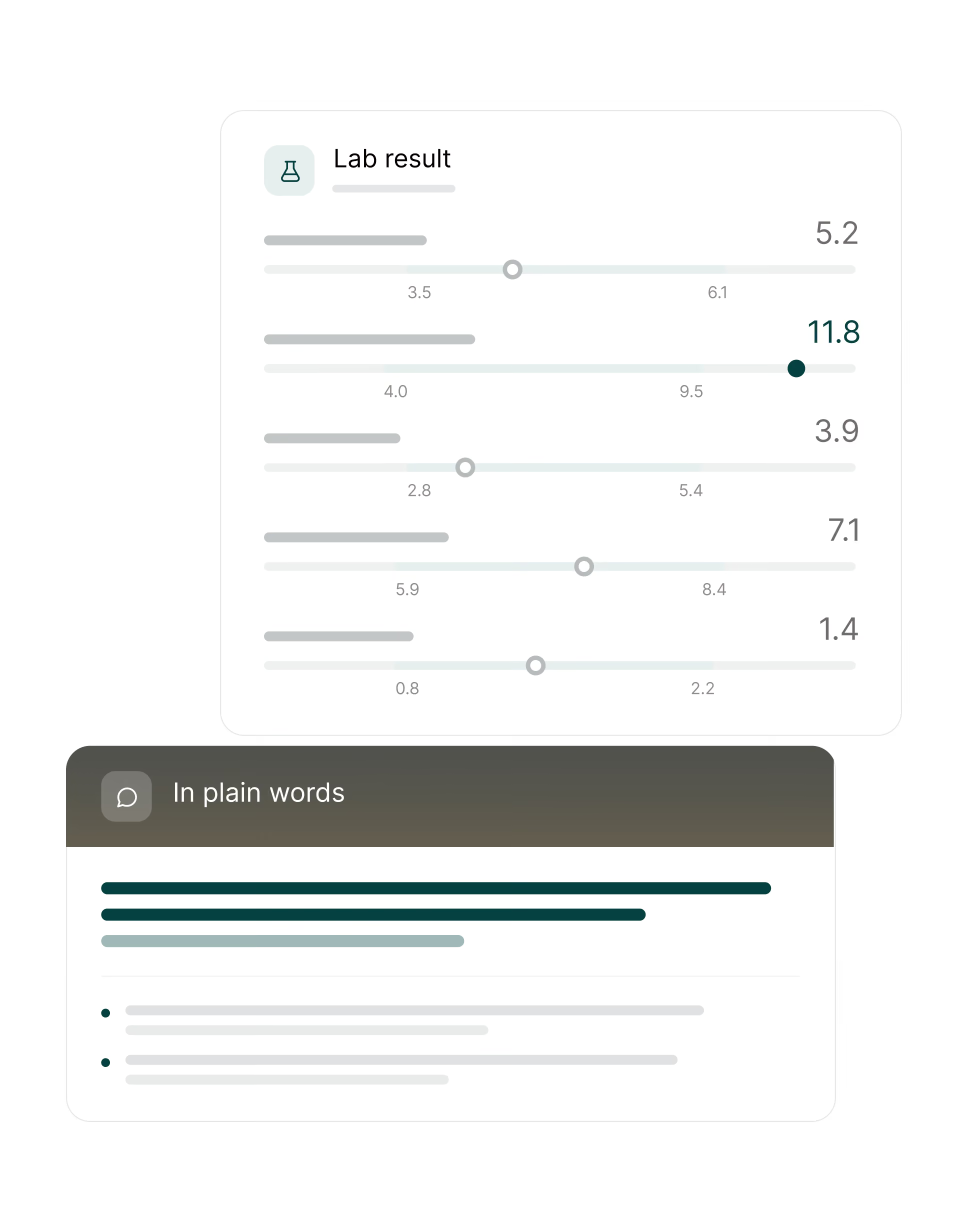
O diagnóstico final é feito de forma mais eficaz por uma equipa multidisciplinar, composta por um pneumologista, um radiologista e um patologista, porque o tipo específico da doença determina qual o tratamento mais adequado. A lista de centros especializados em DPI e fibrose pulmonar na Polónia, disponível em mama health, indica onde é possível fazer uma avaliação por uma equipa multidisciplinar. Os relatórios de TC e os resultados dos testes de função pulmonar podem ser explicados em linguagem simples na aplicação « mama health », uma aplicação gratuita de apoio à fibrose pulmonar.
O que está por trás mama health
Supervisão médica, medidas de proteção dos teus dados e um objetivo claro para cada experiência anónima partilhada.
.avif)







Revisado pelos nossos médicos
Os nossos médicos analisam as fontes médicas subjacentes a cada resposta da IA. Concebido para oferecer uma elevada precisão desde a tua primeira conversa.

Anonimizado de vez
Os teus dados pessoais são encriptados e nunca são partilhados. Transformamo-los em informações anónimas. Tudo isto de acordo com as rigorosas normas europeias em matéria de proteção de dados.

Contribuir para a investigação
Os parceiros aprendem com as experiências dos doentes, que são mantidas anónimas. Isso ajuda a impulsionar a investigação e a desenvolver melhores tratamentos.
Todas as condições que adicionamos ao mama health submetidas a verificações minuciosas.



Perguntas mais frequentes
O relatório vai aparecer na tua caixa de entrada em breve✅
Se quiseres saber como as informações em tempo real sobre os pacientes podem fortalecer as tuas estratégias comerciais, marca uma conversa através do link abaixo.