Cada día con fibrosis pulmonar surge una nueva pregunta

Una app gratis para todo Fibrosis pulmonar te ofrece todo lo que necesitas, basada en la ciencia médica y en las experiencias de otras personas, para que no tengas que averiguarlo todo por tu cuenta.

Una app para todo Fibrosis pulmonar te pide
Respuestas personalizadas antes, después y entre cada cita.





Lo que debes saber sobre la fibrosis pulmonar
Lo básico sobre causas, tipos, síntomas, tratamiento y diagnóstico, redactado a partir de las guías médicas y revisado por nuestros médicos. Abre las secciones que te interesen.
¿Qué es la fibrosis pulmonar?
La fibrosis pulmonar es la formación de cicatrices en el tejido pulmonar, en la que el tejido elástico sano se va sustituyendo poco a poco por tejido cicatricial grueso y rígido. Los pulmones pierden capacidad para expandirse y para transportar oxígeno al torrente sanguíneo, por eso la dificultad para respirar es el síntoma más característico. La fibrosis pulmonar no es una enfermedad en sí misma, sino el resultado común de muchas afecciones pulmonares agrupadas bajo el término «enfermedad pulmonar intersticial» (EPI). En la guía de mama health sobre cómo se desarrolla la cicatrización pulmonar se explica con más detalle.
¿Qué causa la fibrosis pulmonar?
En muchas personas no se encuentra una causa concreta, lo que se conoce como fibrosis pulmonar idiopática. En otras, aparece tras un desencadenante identificable: una enfermedad autoinmune o del tejido conectivo, la exposición prolongada al polvo, los humos, el moho o las proteínas de las aves, ciertos medicamentos, la radioterapia torácica o una lesión pulmonar grave. Tanto fumar como tener antecedentes familiares aumentan el riesgo, y se han identificado variantes genéticas específicas. La fibrosis tras una infección grave por COVID afecta a un pequeño grupo de personas, y la guía de mama health sobre la recuperación tras la COVID recoge todo lo que se sabe al respecto.
Tipos de fibrosis pulmonar
La fibrosis pulmonar idiopática (FPI) es la forma más común, sin una causa identificable, y suele diagnosticarse a partir de los 50 años.
La fibrosis pulmonar progresiva (FPP) es una EPI fibrótica no relacionada con la FPI que sigue empeorando a pesar del tratamiento habitual.
La neumopatía intersticial asociada a enfermedades del tejido conectivo (CTD-ILD) es una fibrosis que surge a raíz de una enfermedad autoinmune, como la artritis reumatoide o la esclerosis sistémica.
La neumonitis por hipersensibilidad (NH) se desencadena por la inhalación repetida de un alérgeno y puede volverse fibrótica si la exposición continúa.
La fibrosis relacionada con la sarcoidosis es una complicación tardía de la sarcoidosis.
La fibrosis pulmonar provocada por medicamentos o por la radiación se produce tras tomar determinados medicamentos o recibir radioterapia en el tórax.
Las neumoconias son fibrosis profesionales causadas por el polvo de sílice, amianto o carbón.
Se habla de fibrosis pulmonar familiar cuando hay dos o más familiares cercanos afectados.
Se habla de «ILD no clasificable » cuando ni siquiera un equipo multidisciplinar puede establecer un diagnóstico concreto.
Es importante diagnosticar bien el tipo de enfermedad, porque el tratamiento difiere de forma fundamental entre la FPI y las demás formas.
Opciones de tratamiento
No hay cura para la cicatrización en sí, pero los medicamentos antifibróticos frenan el ritmo de deterioro de la función pulmonar, y los inmunomoduladores se usan para las enfermedades pulmonares intersticiales (EPI) provocadas por trastornos autoinmunes. No se recomienda la inmunosupresión de forma rutinaria en la FPI estable, ya que puede ser perjudicial. La guía sobre medicamentos para la fibrosis pulmonar de mama health repasa las distintas clases de fármacos.
Los cuidados de apoyo son tan importantes como la medicación: la rehabilitación pulmonar, el oxígeno suplementario cuando bajan los niveles, las vacunas y el tratamiento del reflujo y la apnea del sueño. Echa un vistazo a la sección «Cómo vivir con fibrosis pulmonar en el día a día» para saber cómo organizarte y gestionar tus citas, y qué comer y qué evitar en cuanto al peso y el apetito.
Se puede plantearse el trasplante de pulmón para las personas que cumplan los requisitos y padezcan fibrosis pulmonar avanzada; se recomienda acudir pronto a una evaluación en lugar de esperar a que la persona se encuentre muy mal. La atención se coordina a través de centros especializados en enfermedades pulmonares intersticiales (EPI), que en Suiza figuran en la lista de centros de fibrosis pulmonar de Suiza. Si tienes alguna duda entre citas, puedes enviarla a mama health, un servicio gratuito de apoyo para la fibrosis pulmonar.
¿Quién tiene riesgo de desarrollar fibrosis pulmonar?
El riesgo es mayor a partir de los 50 años, en los hombres y si tienes antecedentes de tabaquismo o antecedentes familiares de fibrosis pulmonar. Las enfermedades autoinmunes o del tejido conectivo, la exposición prolongada al polvo, los humos o el moho, haber recibido radioterapia torácica anteriormente y ciertos medicamentos también lo aumentan. El reflujo ácido es frecuente en personas con FP y puede contribuir a la lesión pulmonar, como se explica en el apartado sobre ERGE y fibrosis pulmonar.
¿Cuáles son los síntomas de la fibrosis pulmonar?
El primer síntoma suele ser la dificultad para respirar al hacer esfuerzo, que al principio se nota al subir escaleras o cuestas, y luego incluso con actividades más ligeras. Al principio, a menudo se le echa la culpa a otra cosa, y en «Fibrosis pulmonar frente a EPOC» se explica en qué se diferencian ambas.
La tos seca persistente es el otro síntoma clásico y, a menudo, el más molesto; te lo contamos en el artículo sobre la tos persistente y cuándo acudir al médico. La fatiga, más allá de la dificultad para respirar, la pérdida de peso y la disminución del apetito también son comunes, y en el artículo sobre la fatiga en la fibrosis pulmonar te explicamos por qué.
Los dedos hipocráticos pueden aparecer con el tiempo, y si un médico ausculta los pulmones, puede oír crepitaciones finas en las bases. Para tener una visión general completa de los síntomas, incluyendo los cambios que se producen más adelante, echa un vistazo a la guía completa. Los cambios que se producen semana a semana los puedes seguir en un solo sitio con la app « mama health », una app gratuita sobre la fibrosis pulmonar.
¿Cómo se diagnostica la fibrosis pulmonar?
El diagnóstico combina un historial detallado de exposiciones, profesiones y medicación con pruebas respiratorias, sobre todo la FVC y la DLCO, que se repiten a lo largo del tiempo. La TC de alta resolución es la prueba de imagen más importante, y los análisis de sangre sirven para descartar causas autoinmunes. La prueba de marcha de seis minutos mide si los niveles de oxígeno bajan con la actividad, y en algunos casos hay que hacer una biopsia pulmonar.
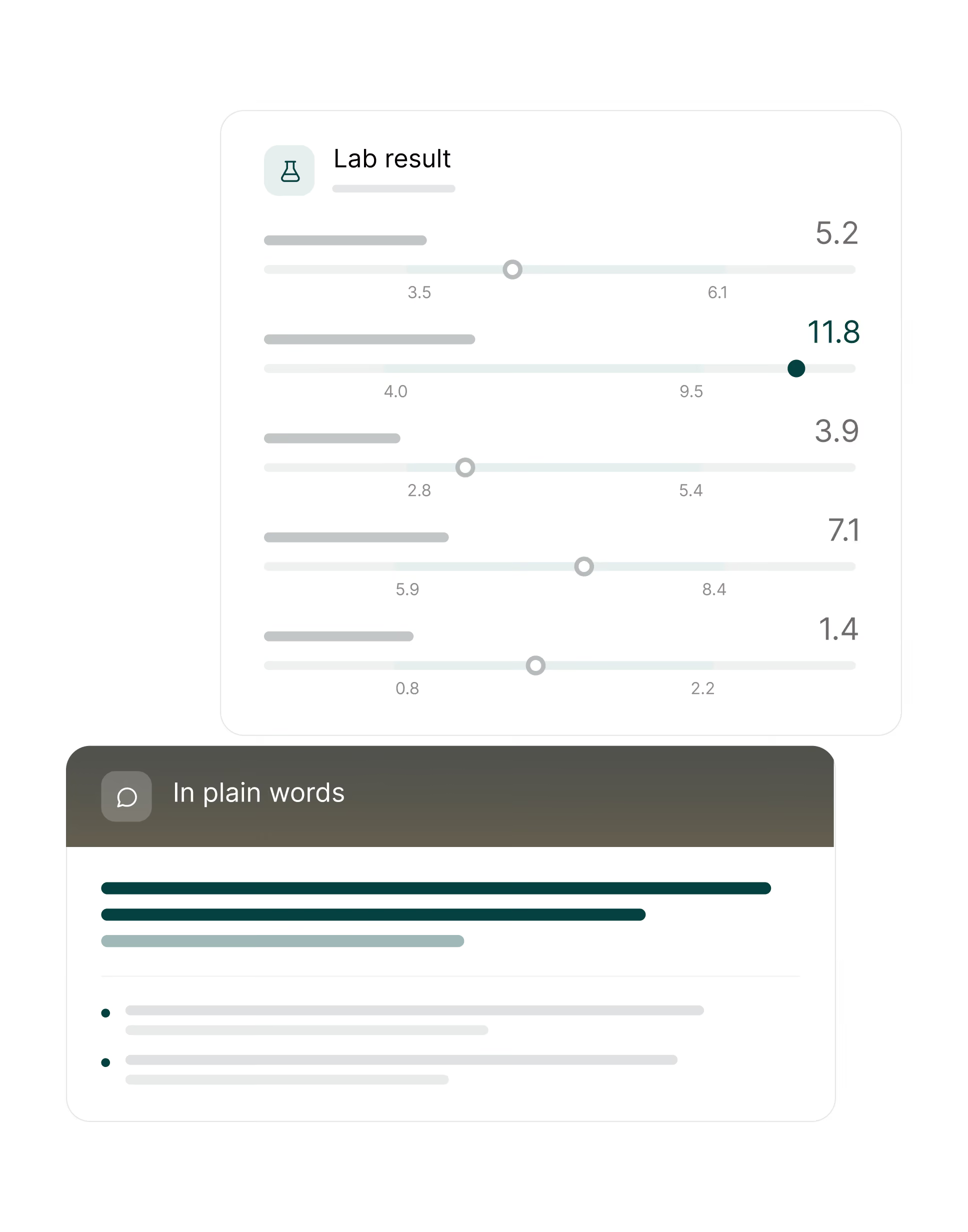
El diagnóstico definitivo lo hace mejor un equipo multidisciplinar, formado por un neumólogo, un radiólogo y un patólogo, porque el tipo específico de la enfermedad determina qué tratamiento funciona. La lista de centros de EPI y fibrosis pulmonar en Polonia que aparece en mama health muestra dónde se puede realizar una evaluación por parte de un equipo multidisciplinar. Los informes de TC y los resultados de las pruebas de función pulmonar se pueden consultar en un lenguaje sencillo en la aplicación mama health , una app gratuita de apoyo para la fibrosis pulmonar.
¿Qué hay detrás de mama health?
Supervisión médica, medidas de seguridad para proteger tus datos y un objetivo claro para cada experiencia anónima que se comparta.
.avif)







Revisado por nuestro equipo médico
Nuestros médicos revisan las fuentes médicas en las que se basa cada respuesta de la IA. Diseñado para ofrecerte una gran precisión desde tu primera conversación.

Anonimizado para siempre
Tus datos personales están encriptados y nunca se comparten. Los convertimos en información anónima. Todo ello siguiendo las estrictas normas europeas de protección de datos.

Contribuir a la investigación
Los socios aprenden de las experiencias de los pacientes, que se tratan de forma anónima. Eso ayuda a impulsar la investigación y a desarrollar mejores tratamientos.
Todas las condiciones que añadimos a mama health a minuciosas comprobaciones. Te informamos de que...



Preguntas más frecuentes
El informe aparecerá en tu bandeja de entrada en breve✅
Si deseas descubrir cómo la información en tiempo real sobre los pacientes puede reforzar tus estrategias comerciales, reserva una charla a través del siguiente enlace.