Every day with Heart Failure raises a new question

A free app for everything Heart Failure asks of you, grounded in medical science and the experience of others, so you don't have to figure it out alone.

One app for everything Heart Failure asks of you
Personalized answers before, after, and in between every appointment.



What to know about Heart Failure
The basics on causes, types, symptoms, treatment and diagnosis, written from medical guidelines and reviewed by our in-house doctors. Open the parts that apply to you.
What is heart failure?
Heart failure does not mean the heart has stopped, and the name frightens people more than their own situation often warrants. It is a chronic condition in which the heart cannot pump enough blood to meet the body's needs, or can do so only at abnormally high filling pressures.
It may involve reduced contraction, impaired relaxation, or both, and can affect the left, right or both sides of the heart. Symptoms may remain stable with treatment or worsen suddenly during an acute decompensation that requires urgent care. mama health's guide to what heart failure is covers the causes, treatment and daily life in more detail.
What causes heart failure?
Common causes include coronary artery disease, previous heart attack, long-standing high blood pressure, heart-valve conditions, cardiomyopathy, abnormal heart rhythms, congenital heart conditions, and inflammation or toxins that damage heart muscle.
Diabetes, kidney conditions, obesity, sleep apnea, thyroid conditions, alcohol or stimulant misuse, certain cancer treatments and genetic conditions can also contribute. Sometimes more than one cause is present.
Treatment options
Treatment may include diuretics for fluid retention and guideline-directed medicines that improve symptoms and reduce the chance of hospitalization. The exact combination depends on ejection fraction, blood pressure, kidney function, potassium levels, rhythm and other conditions. mama health's guides to heart failure medications and the four medicines that changed heart failure treatment cover what each one does and why they are usually prescribed together.
Cardiac rehabilitation, sodium and fluid guidance, treating contributing conditions, implanted devices, valve procedures, revascularization, or advanced therapies such as ventricular assist devices and transplantation may be appropriate in selected cases. Salt is the single most asked-about part of daily care, covered in heart failure and salt intake. Questions between appointments can be put through mama health, which is free heart failure support grounded in medical science and the experience of others.
Living with heart failure
Daily self-monitoring helps identify worsening congestion early. Clinical teams often set out an individualized action plan covering weight, swelling, breathlessness, blood pressure and medication use, and what to do when any of them changes.
Regular physical activity within safe limits, vaccination, stopping smoking where relevant, and careful management of blood pressure, diabetes, kidney conditions and sleep apnea all support long-term health. Nonsteroidal anti-inflammatory drugs and some other medicines can worsen fluid retention and are worth reviewing with a clinician rather than stopping independently. Appetite loss and disturbed sleep are both common and both under-discussed, covered in mama health's guides to eating when appetite is poor and chronic insomnia. Daily weights, medicines and symptoms can be kept in one place in the mama health app, a free heart failure app built with in-house doctors.
When to seek emergency care
Seek emergency care for severe shortness of breath at rest, pink or frothy sputum, chest pain, fainting, blue or gray lips, new severe confusion, a very fast or irregular heartbeat with weakness, or rapid worsening with an inability to lie flat.
What can treatment achieve?
Heart failure is usually a long-term condition, and symptoms and daily function can improve substantially with modern treatment. How much difference it makes depends on the cause, heart function, kidney health, response to treatment and other conditions, all of which the cardiology team reviews over time. Treatment for heart failure has changed considerably in recent years, and a combination that was not available a decade ago is now standard.
Who is at risk of developing heart failure?
Risk factors include coronary artery disease, high blood pressure, diabetes, obesity, smoking, kidney conditions, sleep apnea, heart-valve conditions, abnormal rhythms, prior heart attack, cardiotoxic chemotherapy, heavy alcohol use and a family history of cardiomyopathy.
Heart failure is also monitored alongside the kidneys and liver, because their function is closely linked to how well the heart is pumping, and alongside heart rhythm and fluid balance. Those checks are routine care rather than a sign that something has gone wrong.
What are the symptoms of heart failure?
Symptoms include shortness of breath during activity or when lying flat, waking at night breathless, fatigue, reduced exercise tolerance, swelling of the feet, ankles, legs or abdomen, rapid weight gain from fluid, persistent cough, palpitations, dizziness, loss of appetite and difficulty concentrating. Right-sided heart failure may cause prominent abdominal swelling and neck-vein distention.
A persistent cough is easily attributed to something else, and mama health's guide to a persistent cough and when to see a doctor covers what is worth raising. Fatigue that does not lift with rest is often the symptom people find hardest, covered in fatigue that isn't ordinary tiredness.
How is heart failure diagnosed?
Evaluation begins with symptom history, medication review, examination for congestion, electrocardiography, chest X-ray and laboratory tests including natriuretic peptides. Those levels can support or argue against heart failure in the right clinical setting, while kidney, liver, thyroid, blood count, iron and electrolyte tests identify contributors and treatment constraints.
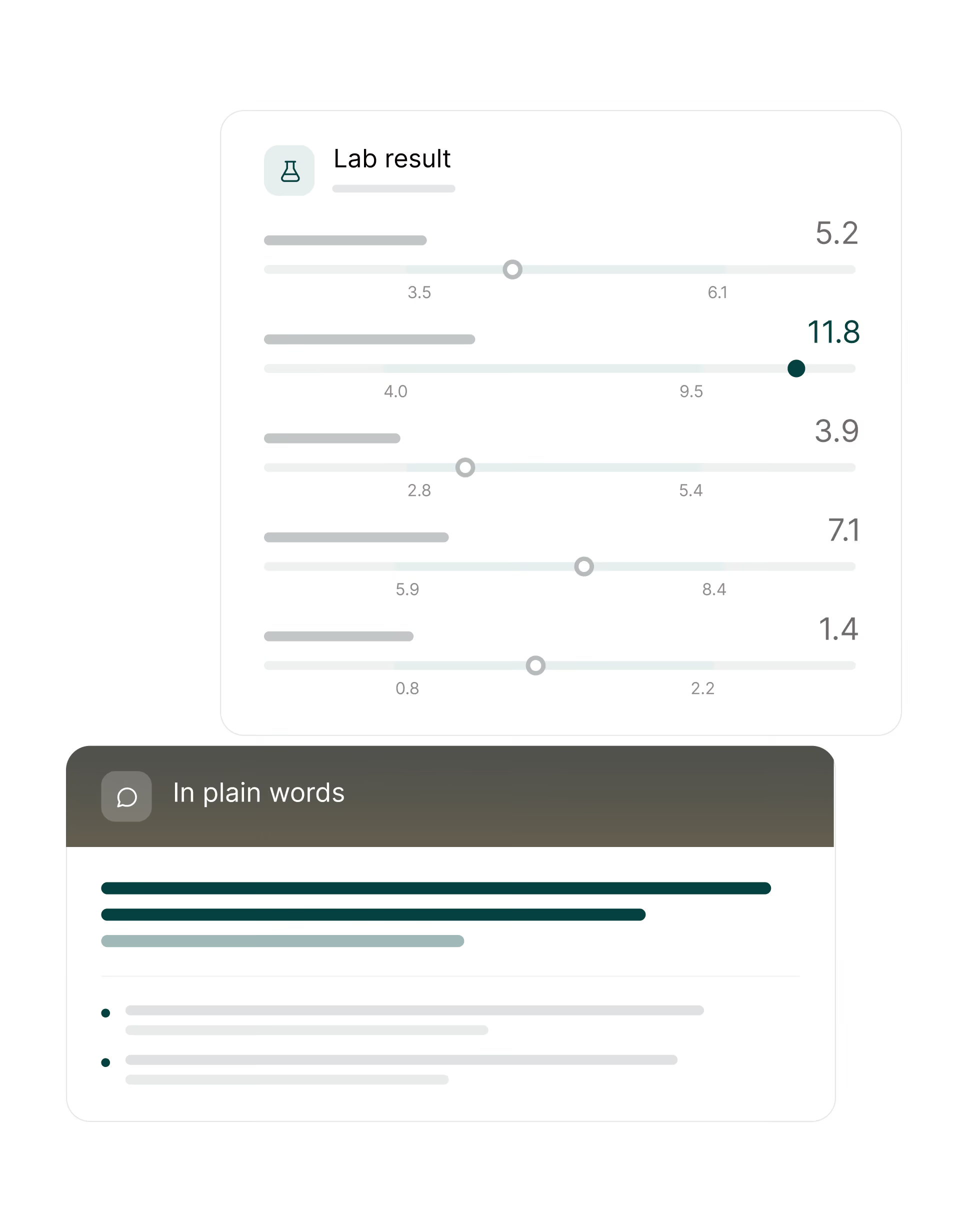
Echocardiography measures ejection fraction and assesses chamber size, valves, pressures and wall motion, and additional testing identifies the underlying cause. Coronary imaging, cardiac MRI, rhythm monitoring, stress testing, genetic assessment or cardiac catheterization may be needed to identify the cause or plan advanced treatment. Ejection fraction figures, blood results and letters can be read back in plain language in the mama health app, a free heart failure support app.
What stands behind mama health
Medical oversight, safeguards around your data, and a clear purpose for every anonymized experience shared.
.avif)







Reviewed by our doctors
Our doctors review the medical sources behind every AI answer. Designed for high accuracy from your first chat.

Anonymized for good
Your personal data is encrypted and never shared. We turn it into anonymized insights. All under strict European data standards.

Contributing to research
Partners learn from anonymized patient experiences. That helps push research and better treatments forward.
All conditions we add to mama health go through careful checks.



Frequently asked questions
The report will appear in your inbox shortly✅
If you would like to explore how real-time patient insights can strengthen your commercial strategies, book a chat through the link below.