Every day with Lung Cancer raises a new question

A free app for everything Lung Cancer asks of you, grounded in medical science and the experience of others, so you don't have to figure it out alone.

One app for everything Lung Cancer asks of you
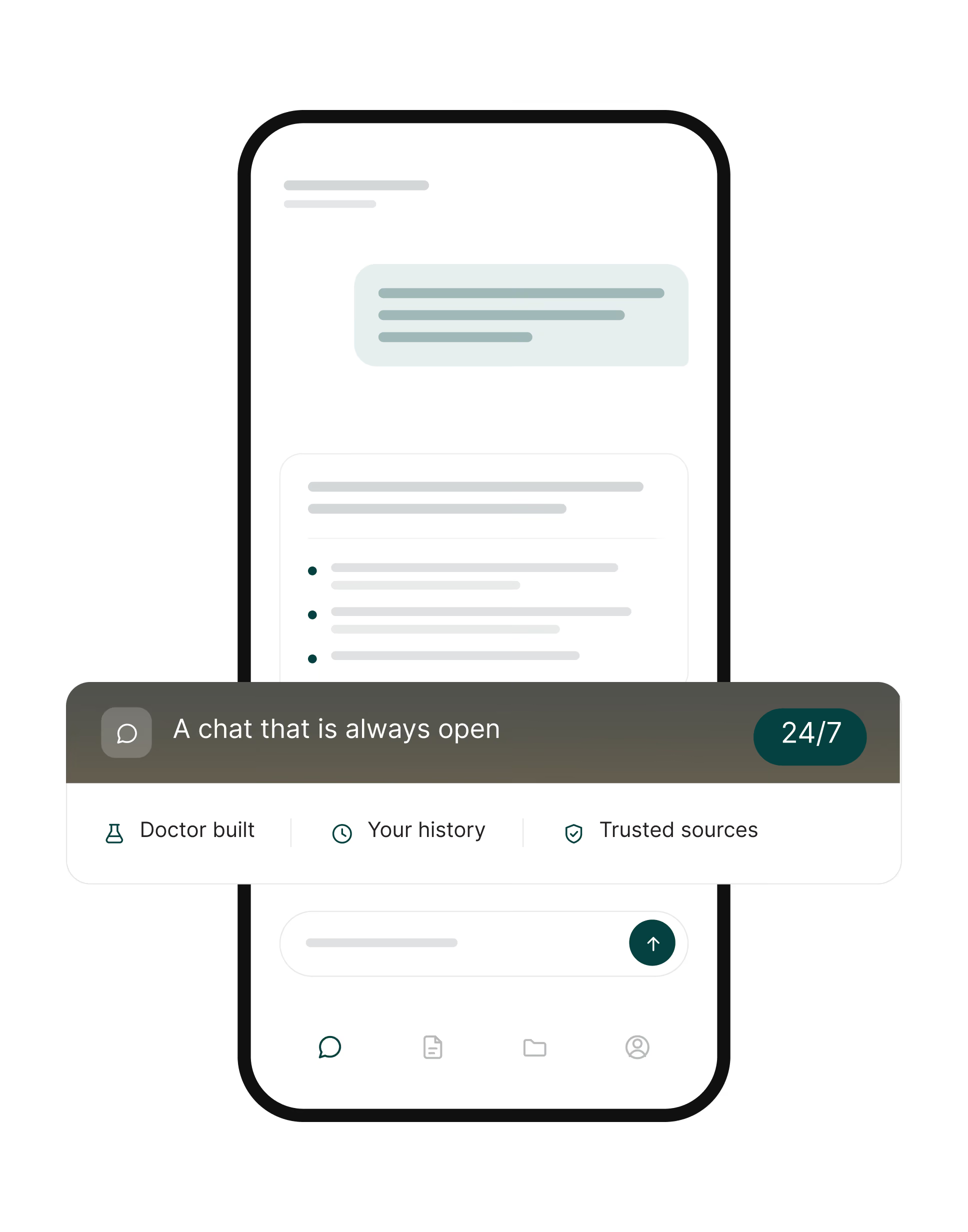
Personalized answers before, after, and in between every appointment.
What to know about Lung Cancer
The basics on causes, types, symptoms, treatment and diagnosis, written from medical guidelines and reviewed by our in-house doctors. Open the parts that apply to you.
What is lung cancer?
Lung cancer develops when abnormal cells in the lungs grow uncontrollably. These cells can form a tumour and may spread to nearby lymph nodes or other parts of the body.
There are different types of lung cancer. The type and stage help healthcare professionals understand the disease and assess treatment options.
What are the main types of lung cancer?
The two main types are:
- Non-small cell lung cancer (NSCLC): The most common type. It includes adenocarcinoma, squamous cell carcinoma and large cell carcinoma.
- Small cell lung cancer (SCLC): A less common type that generally grows and spreads more quickly.
These types behave differently and require different approaches to treatment.
What does the stage of lung cancer mean?
The stage describes the size of the cancer and whether it has spread to lymph nodes or other parts of the body.
Non-small cell lung cancer is generally described using stages I to IV. Small cell lung cancer may also be described as limited-stage or extensive-stage, depending on how far it has spread.
What are the symptoms of lung cancer?
Symptoms may include:
- A persistent cough or a change in an existing cough.
- Breathlessness.
- Chest or shoulder pain.
- Coughing up blood.
- Repeated chest infections.
- Persistent tiredness.
- Reduced appetite or unexplained weight loss.
Lung cancer may cause few or no symptoms in its early stages. These symptoms can also have other causes, so medical assessment is important.
How is lung cancer diagnosed?
Diagnosis usually involves imaging, such as a CT scan, and examination of a sample of cells or tissue. A sample may be collected during a bronchoscopy, which looks inside the airways, or through another biopsy procedure.
Additional tests, such as PET-CT or MRI scans, may help determine whether the cancer has spread. The tests needed vary according to the situation.
What is biomarker testing?
Biomarker testing looks for particular gene changes or proteins in cancer cells. These results can help healthcare professionals assess whether certain treatments may be suitable, especially for non-small cell lung cancer.
Testing may identify gene changes that can be targeted by medicines. A protein called PD-L1 may also be tested to help inform decisions about immunotherapy.
Tumour biomarker testing is different from testing for inherited genetic changes. A gene change found in cancer cells does not necessarily mean it runs in the family.
What treatments are used for lung cancer?
Treatment options include surgery, radiotherapy, chemotherapy, targeted therapy and immunotherapy. Sometimes several approaches are used together.
The options depend on the type and stage of cancer, biomarker results, general health and individual preferences. Treatment may aim to cure the cancer, reduce the chance of it returning, control its growth or relieve symptoms.
How do targeted therapy and immunotherapy differ?
Targeted therapy acts on specific changes or processes that help cancer cells grow. Some targeted treatments are only suitable when testing identifies a particular change in the cancer.
Immunotherapy helps the immune system recognise and attack cancer cells. Its suitability depends on several factors, including the type of lung cancer and relevant test results.
Neither approach is suitable for everyone. A specialist team assesses the available options.
What side effects can lung cancer treatments cause?
Side effects vary by treatment and from person to person. They may include tiredness, nausea, appetite changes, skin problems, bowel changes or an increased risk of infection. Some treatments can also affect breathing.
Healthcare professionals can explain possible side effects and ways to manage them. New or worsening symptoms should be reported, as they may need assessment.
What is supportive and palliative care?
Supportive and palliative care help manage symptoms such as breathlessness, pain, tiredness and nausea, as well as emotional and practical concerns.
Palliative care can be provided alongside cancer treatment and can begin early in the illness. Its purpose is to improve comfort and quality of life.
How can lung cancer affect everyday life?
Lung cancer and its treatment can affect energy, breathing, appetite, sleep, work and relationships. The impact varies from person to person.
Healthcare teams can help with symptom management and referrals for nutritional advice, rehabilitation or psychological support. Patient organisations can also provide information and opportunities to connect with others.
When is urgent medical attention needed?
Severe or sudden difficulty breathing, significant coughing up of blood, or sudden chest pain, especially with breathlessness, require emergency assessment.
During cancer treatment, fever, shaking chills, signs of infection or suddenly feeling very unwell should be reported immediately to the treating team. Patients should follow the urgent contact instructions provided by their healthcare professionals.
What stands behind mama health
Medical oversight, safeguards around your data, and a clear purpose for every anonymized experience shared.








Reviewed by our doctors
Our doctors review the medical sources behind every AI answer. Designed for high accuracy from your first chat.

Anonymized for good
Your personal data is encrypted and never shared. We turn it into anonymized insights. All under strict European data standards.

Contributing to research
Partners learn from anonymized patient experiences. That helps push research and better treatments forward.
All conditions we add to mama health go through careful checks.



Frequently asked questions
The report will appear in your inbox shortly✅
If you would like to explore how real-time patient insights can strengthen your commercial strategies, book a chat through the link below.