Every day with Psoriasis raises a new question

A free app for everything Psoriasis asks of you, grounded in medical science and the experience of others, so you don't have to figure it out alone.

One app for everything Psoriasis asks of you
Personalized answers before, after, and in between every appointment.



What to know about Psoriasis
The basics on causes, types, symptoms, treatment and diagnosis, written from medical guidelines and reviewed by our in-house doctors. Open the parts that apply to you.
What is psoriasis?
Psoriasis is a long-term immune-mediated condition that causes skin cells to build up more quickly than usual, creating inflamed, raised or scaly areas that may itch, burn or feel painful. Symptoms often alternate between flares and periods when the skin improves or clears. Psoriasis is not contagious. mama health's guide to what psoriasis feels like covers the early signs and how people describe them.
What causes psoriasis?
Psoriasis develops when the immune system becomes overactive and speeds up the production of skin cells. The exact reason is not fully understood, but genetics and environmental factors both play a role. Psoriasis is not caused by poor hygiene or something a person has done. mama health's guide to what causes psoriasis and what triggers flares goes through the known triggers.
Food and nutrition come up more than almost any other question. See whether vitamin deficiencies cause psoriasis, why people try elimination diets and psoriasis and diet for what the evidence actually shows.
Emotional well-being
Visible skin changes, itching and unpredictable flares can affect confidence and emotional well-being. Some people experience embarrassment, isolation, anxiety or low mood.
These experiences are an important part of psoriasis care and should be discussed with the healthcare team. Seeking emotional support does not mean that psoriasis is "all in the mind." mama health's guide to stress and psoriasis covers the flare patterns people report and what they have tried.
Types of psoriasis
Plaque psoriasis is the most common type and causes raised, scaly patches, covered in full in plaque psoriasis.
Guttate psoriasis causes small spots and may appear after an infection.
Inverse psoriasis develops in skin folds and often looks smooth rather than scaly.
Pustular psoriasis causes pus-filled bumps.
Erythrodermic psoriasis causes widespread redness and shedding of the skin.
A person may experience more than one type during their lifetime.
How is psoriasis treated?
Treatment depends on the type, the areas affected, the severity and how much it affects daily life. Options may include creams or ointments, phototherapy, tablets, injections and biologic treatments. mama health's guide to psoriasis treatment options covers each with what other people experienced.
There is no single treatment that works for everyone, and some people try several before finding one that controls their symptoms. If something stops working, why psoriasis treatment stops working covers what happens next, and whether psoriasis can be cured explains remission and ongoing care. Scalp treatment differs from treatment elsewhere, covered in scalp psoriasis treatment. Questions between appointments can be put through mama health, which is free psoriasis support grounded in medical science and the experience of others.
Skin care and daily life
Moisturizing regularly can help reduce dryness, scaling and discomfort, and mama health's guide to creams, ointments and skincare covers what to look for. Natural remedies and vitamins sets out where the evidence stands on the alternatives people try.
Psoriasis can affect sleep, clothing choices, work, relationships and social activities, which living with psoriasis covers in more detail. A treatment plan should consider not only how much skin is affected but how the condition influences everyday life. What changes week to week can be kept in one place in the mama health app, a free psoriasis app built with in-house doctors.
Who is at risk of developing psoriasis?
Anyone can develop psoriasis. A family history may increase the likelihood, because certain genes influence how the immune system works. Smoking, obesity, certain infections and some medicines are also associated with a higher likelihood, although having a risk factor does not mean someone will definitely develop it.
Psoriasis affects more than the skin. People with psoriasis have a higher likelihood of developing certain other conditions, including cardiovascular disease, metabolic syndrome, diabetes, inflammatory bowel disease, anxiety and depression. This does not mean everyone with psoriasis will develop these, and regular health checks help identify additional risks. mama health's guides to which organs psoriasis affects and how serious psoriasis is cover the associated conditions in more detail.
What are the symptoms of psoriasis?
Common symptoms include raised or thickened areas of skin, scaling, itching, burning, soreness and dry skin that may crack or bleed. Psoriasis commonly affects the scalp, elbows, knees, lower back, palms and soles, but it can appear anywhere. The scalp is the most frequently affected site, covered in scalp psoriasis and whether scalp psoriasis causes hair loss.
It can also affect the nails, causing small dents, discoloration, thickening or separation from the nail bed, covered in nail psoriasis. Recognizing psoriasis can be harder on darker skin, and what psoriasis looks like on different skin tones sets out the differences.
Some people develop psoriatic arthritis, which causes inflammation in the joints and where tendons connect to bones. Symptoms may include joint pain, swelling, stiffness, back pain or pain around the heel, covered in psoriasis and joint symptoms. New or persistent joint symptoms should be discussed with a healthcare professional promptly, because untreated psoriatic arthritis can cause permanent joint damage.
How is psoriasis diagnosed?
A healthcare professional usually diagnoses psoriasis by examining the skin, scalp and nails and asking about symptoms, joint problems and family history. A small skin sample may occasionally be taken to rule out other conditions, and mama health's guide to how psoriasis is diagnosed covers what the appointment involves.
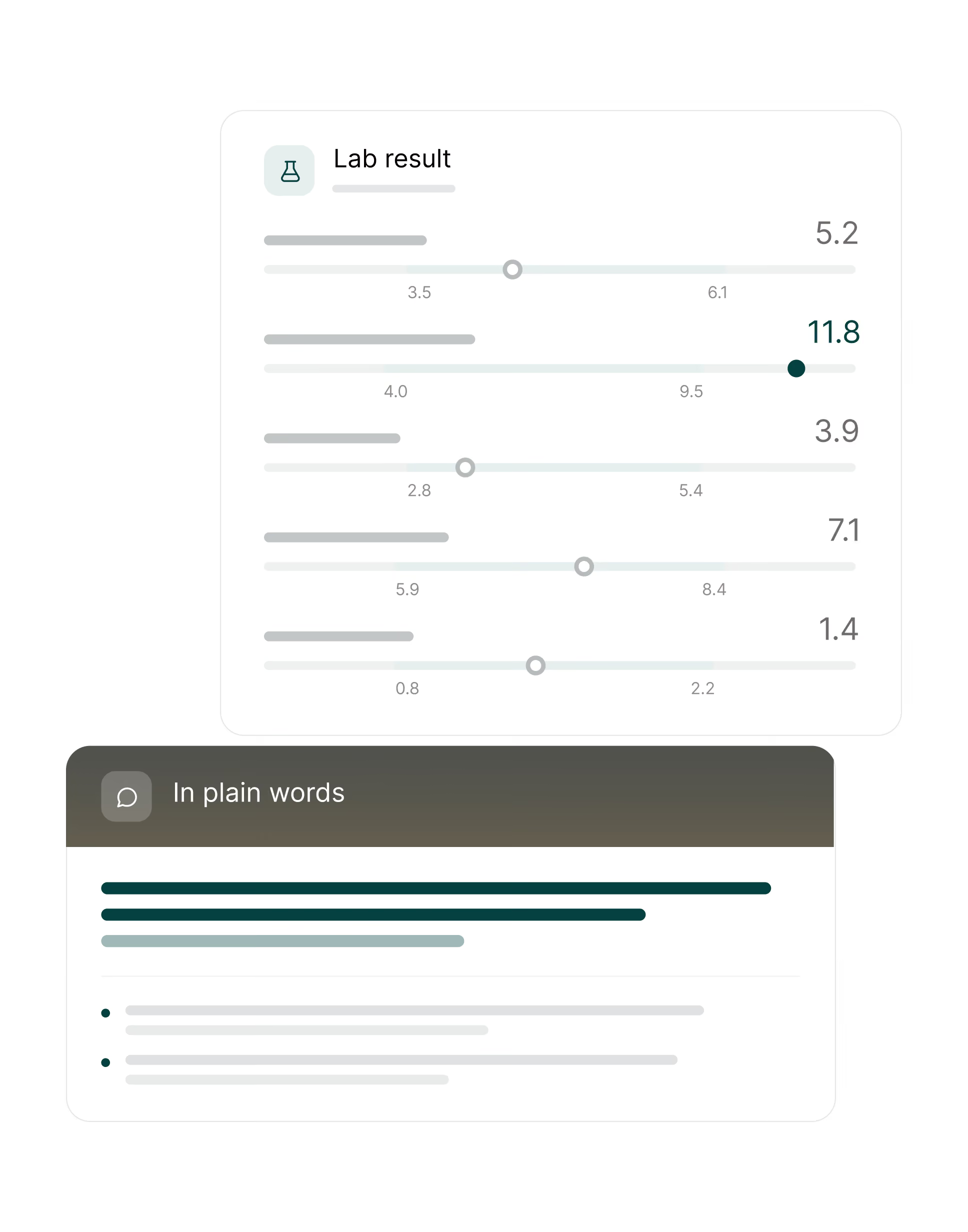
There is no single blood test that confirms psoriasis, although tests may be used to investigate joint symptoms or other possible conditions. Several skin conditions look similar, which psoriasis or something else works through. Results and letters can be read back in plain language in the mama health app, a free psoriasis support app.
What stands behind mama health
Medical oversight, safeguards around your data, and a clear purpose for every anonymized experience shared.
.avif)







Reviewed by our doctors
Our doctors review the medical sources behind every AI answer. Designed for high accuracy from your first chat.

Anonymized for good
Your personal data is encrypted and never shared. We turn it into anonymized insights. All under strict European data standards.

Contributing to research
Partners learn from anonymized patient experiences. That helps push research and better treatments forward.
All conditions we add to mama health go through careful checks.



Frequently asked questions
The report will appear in your inbox shortly✅
If you would like to explore how real-time patient insights can strengthen your commercial strategies, book a chat through the link below.