Every day with Pulmonary Fibrosis raises a new question

A free app for everything Pulmonary Fibrosis asks of you, grounded in medical science and the experience of others, so you don't have to figure it out alone.

One app for everything Pulmonary Fibrosis asks of you
Personalized answers before, after, and in between every appointment.





What to know about Pulmonary Fibrosis
The basics on causes, types, symptoms, treatment and diagnosis, written from medical guidelines and reviewed by our in-house doctors. Open the parts that apply to you.
What is pulmonary fibrosis?
Pulmonary fibrosis is scarring of the lung tissue, where healthy elastic tissue is gradually replaced by thick, stiff scar tissue. The lungs become less able to expand and less able to move oxygen into the bloodstream, which is why breathlessness is the hallmark symptom. PF is not a single condition but the shared endpoint of many lung conditions grouped under interstitial lung disease (ILD). mama health's guide to how lung scarring develops covers it further.
What causes pulmonary fibrosis?
In many people no single cause is found, which is called idiopathic pulmonary fibrosis. In others it follows an identifiable trigger: an autoimmune or connective tissue condition, long-term exposure to dusts, fumes, mold or bird proteins, certain medications, chest radiotherapy, or severe lung injury. Smoking and a family history both raise risk, and specific gene variants have been identified. Fibrosis after a severe COVID infection affects a small subset, and mama health's guide to recovery after COVID covers what is known.
Types of pulmonary fibrosis
Idiopathic pulmonary fibrosis (IPF) is the most common form, with no identifiable cause, usually diagnosed after age 50.
Progressive pulmonary fibrosis (PPF) is a non-IPF fibrotic ILD that keeps worsening despite standard treatment.
Connective tissue disease-associated ILD (CTD-ILD) is fibrosis arising from an autoimmune condition, such as rheumatoid arthritis or systemic sclerosis.
Hypersensitivity pneumonitis (HP) is triggered by repeated inhalation of an allergen, and can become fibrotic if exposure continues.
Sarcoidosis-related fibrosis is a late complication of sarcoidosis.
Drug- or radiation-induced pulmonary fibrosis follows specific medications or chest radiotherapy.
Pneumoconioses are occupational fibrosis from silica, asbestos or coal dust.
Familial pulmonary fibrosis is when two or more close relatives are affected.
Unclassifiable ILD is when even a multidisciplinary team cannot assign a specific diagnosis.
Getting the type right matters, because treatment differs fundamentally between IPF and the other forms.
Treatment options
There is no cure for the scarring itself, but antifibrotic medicines slow how fast lung function declines, and immune-modulating medicines are used for ILDs driven by autoimmune conditions. Routine immunosuppression is not recommended in stable IPF, where it can cause harm. mama health's guide to pulmonary fibrosis medications goes through the classes.
Supportive care matters as much as medication: pulmonary rehabilitation, supplemental oxygen when levels drop, vaccinations, and treating reflux and sleep apnea. See living with pulmonary fibrosis day to day for pacing and appointments, and what to eat and avoid for weight and appetite.
Lung transplantation may be considered for eligible people with advanced pulmonary fibrosis, and early referral for evaluation is recommended rather than waiting until someone is very unwell. Care is coordinated through specialist ILD centers, listed for Switzerland in pulmonary fibrosis centers in Switzerland. Questions between appointments can be put through mama health, which is free pulmonary fibrosis support.
Who is at risk of developing pulmonary fibrosis?
Risk is higher from age 50, in men, and with a history of smoking or a family history of pulmonary fibrosis. An autoimmune or connective tissue condition, long-term exposure to dusts, fumes or mold, prior chest radiotherapy and certain medications all increase it. Acid reflux is common in people with PF and may contribute to lung injury, covered in GERD and pulmonary fibrosis.
What are the symptoms of pulmonary fibrosis?
The earliest symptom is usually breathlessness on exertion, first noticed on stairs or hills, then with lighter activity. It is often attributed to something else at first, and pulmonary fibrosis vs COPD sets out how the two differ.
A persistent dry cough is the other classic symptom and often the most disruptive, covered in a persistent cough and when to see a doctor. Fatigue beyond breathlessness, weight loss and reduced appetite are common too, and fatigue with pulmonary fibrosis covers why.
Clubbing of the fingertips can develop over time, and a doctor listening to the lungs may hear fine crackles at the bases. For a complete overview of symptoms, including what changes later on, see the full guide. What changes week to week can be kept in one place in the mama health app, a free pulmonary fibrosis app.
How is pulmonary fibrosis diagnosed?
Diagnosis combines a detailed history of exposures, occupations and medications with breathing tests, particularly FVC and DLCO, which are repeated over time. High-resolution CT is the single most important imaging test, and blood tests screen for autoimmune causes. A six-minute walk test measures whether oxygen drops with activity, and a lung biopsy is needed in selected cases.
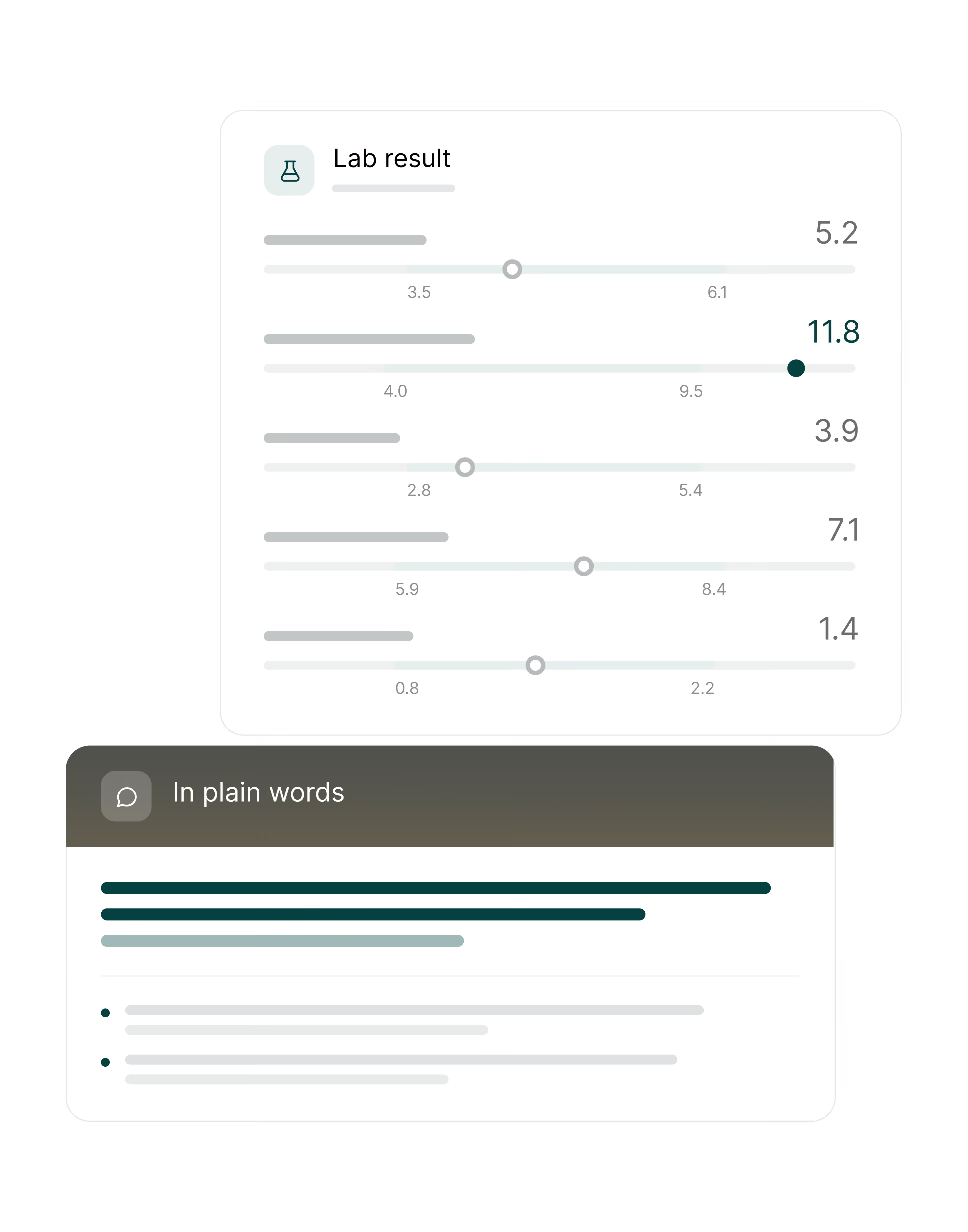
The final diagnosis is best made by a multidisciplinary team, with a pulmonologist, radiologist and pathologist together, because the specific type changes what treatment works. mama health's list of ILD and pulmonary fibrosis centers in Poland shows where MDT assessment is available. CT reports and PFT numbers can be read back in plain language in the mama health app, a free pulmonary fibrosis support app.
What stands behind mama health
Medical oversight, safeguards around your data, and a clear purpose for every anonymized experience shared.
.avif)







Reviewed by our doctors
Our doctors review the medical sources behind every AI answer. Designed for high accuracy from your first chat.

Anonymized for good
Your personal data is encrypted and never shared. We turn it into anonymized insights. All under strict European data standards.

Contributing to research
Partners learn from anonymized patient experiences. That helps push research and better treatments forward.
All conditions we add to mama health go through careful checks.



Frequently asked questions
The report will appear in your inbox shortly✅
If you would like to explore how real-time patient insights can strengthen your commercial strategies, book a chat through the link below.