Every day with Breast Cancer raises a new question

A free app for everything Breast Cancer asks of you, grounded in medical science and the experience of others, so you don't have to figure it out alone.

One app for everything Breast Cancer asks of you
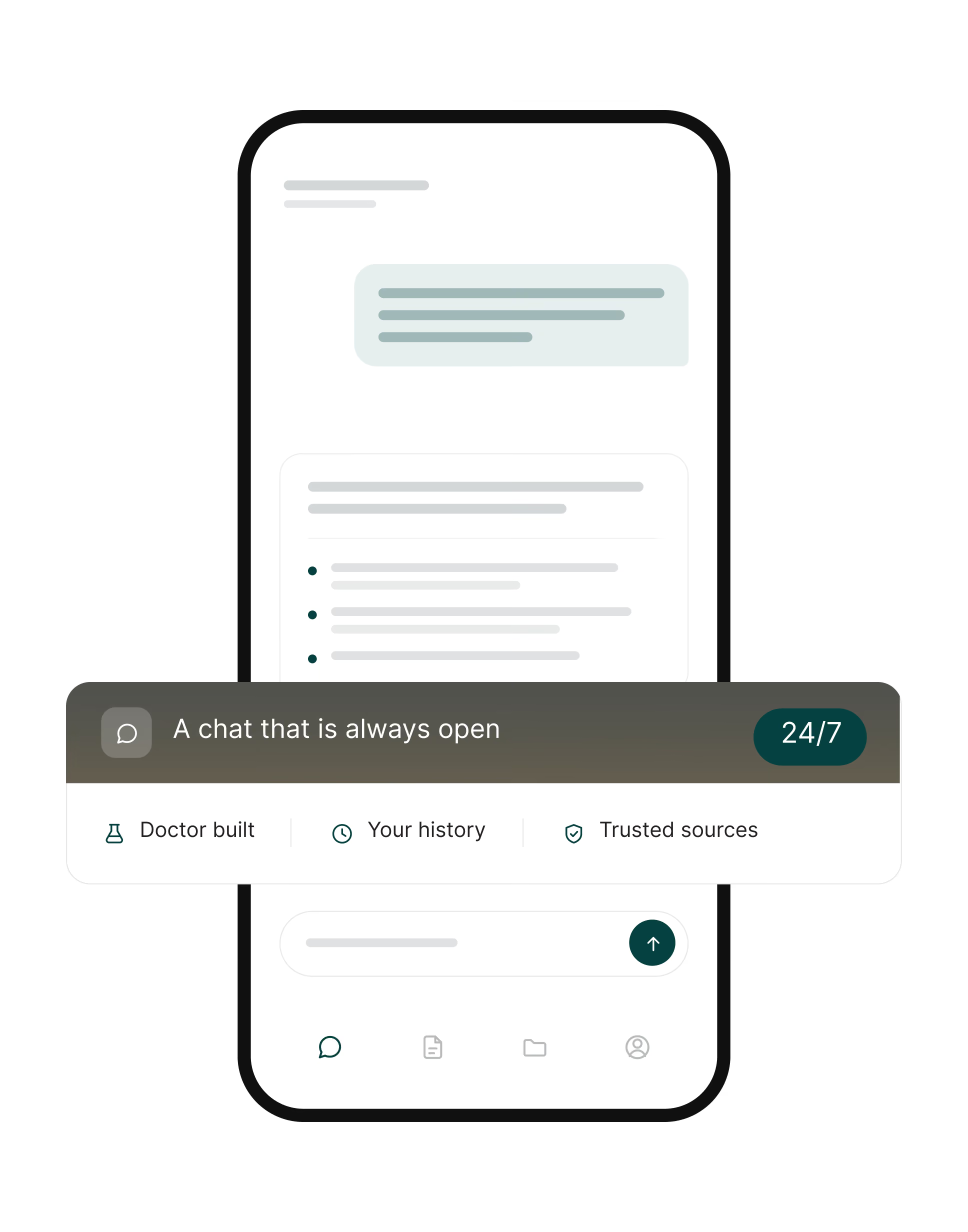
Personalized answers before, after, and in between every appointment.

What to know about Breast Cancer
The basics on causes, types, symptoms, treatment and diagnosis, written from medical guidelines and reviewed by our in-house doctors. Open the parts that apply to you.
What Is Breast Cancer?
Breast cancer develops when cells in the breast grow abnormally and form a cancer. It can begin in different parts of the breast, most commonly in the milk ducts or lobules.
There are several types of breast cancer, and they can behave differently. Tests on the cancer help doctors understand its characteristics and determine which treatments may be most appropriate.
What Causes Breast Cancer?
There is usually no single identifiable cause of breast cancer. It develops when changes in a cell’s DNA cause breast cells to grow and divide abnormally.
Age, hormones, genetics, family history and lifestyle or environmental factors can influence risk. Some people inherit genetic changes, such as certain BRCA1 or BRCA2 variants, that increase their risk, but most breast cancers are not caused by an inherited genetic variant.
Living With Breast Cancer
Breast cancer can affect daily life during treatment and beyond. Fatigue, pain, changes in appearance, treatment side effects and uncertainty about the future can affect work, relationships, sleep, sexuality and emotional wellbeing.
Keeping track of symptoms and treatment side effects and preparing questions before appointments can make it easier to discuss changes with the healthcare team. Support needs can also change throughout diagnosis, treatment and recovery.
Types of Breast Cancer
Breast cancer may be classified by where it begins and whether it has spread beyond its original location. Common types include invasive ductal carcinoma and invasive lobular carcinoma. Ductal carcinoma in situ (DCIS) is a non-invasive condition in which abnormal cells remain within the milk ducts.
Breast cancers are also commonly described according to biomarkers such as estrogen receptor (ER), progesterone receptor (PR) and HER2 status. These include hormone receptor-positive, HER2-positive and triple-negative breast cancers. These characteristics can help guide treatment.
How Is Breast Cancer Treated?
Treatment depends on the type and stage of breast cancer, its biological characteristics and the individual patient. Treatment may include surgery, radiotherapy, chemotherapy, hormone therapy, HER2-targeted therapy, other targeted medicines or immunotherapy.
Some treatments are given before surgery to shrink the cancer, while others are given afterward to reduce the risk of it returning. People with advanced or metastatic breast cancer may receive ongoing treatment to control the cancer, manage symptoms and maintain quality of life.
Surgery for Breast Cancer
Surgery is a common treatment for breast cancer. It may involve removing the cancer and some surrounding tissue (breast-conserving surgery or lumpectomy) or removing the breast (mastectomy). Nearby lymph nodes may also be checked for cancer cells.
Some people have breast reconstruction at the same time as their cancer surgery or later. The most appropriate surgical approach depends on the cancer and the person's circumstances and preferences.
Who is at risk of developing breast cancer?
Breast cancer can affect anyone with breast tissue, although it occurs much more commonly in women and the risk increases with age. Having certain inherited genetic variants, a strong family history or a previous breast cancer can increase risk.
Other factors associated with increased risk include prolonged lifetime exposure to estrogen, alcohol consumption, obesity after menopause and some previous radiation exposure. Having one or more risk factors does not mean that someone will develop breast cancer, and many people diagnosed have no strong family history.
Breast cancer can sometimes return after treatment or spread to other parts of the body. Follow-up care is used to monitor recovery, manage longer-term effects of treatment and investigate new or concerning symptoms.
What are the symptoms of breast cancer?
A new lump or thickening in the breast or armpit is one possible symptom of breast cancer, but breast cancer does not always cause a noticeable lump.
Other changes can include a change in breast size or shape, skin dimpling or redness, changes to the nipple, nipple discharge or persistent breast or nipple pain. Many breast changes are not cancer, but new or unusual changes should be assessed by a healthcare professional.
Some breast cancers are found through screening before they cause any noticeable symptoms. Advanced breast cancer can cause symptoms elsewhere in the body depending on where it has spread.
How is breast cancer diagnosed?
Diagnosis usually begins with an assessment of symptoms or an abnormal screening result. Tests may include a clinical breast examination, mammography, ultrasound and sometimes breast MRI.
A biopsy is used to determine whether an abnormal area contains cancer cells. If breast cancer is found, the tissue is usually tested for characteristics such as ER, PR and HER2 status, which can help guide treatment.
Additional imaging or other tests may be recommended to determine the extent of the cancer. In some situations, genetic testing or tests that examine features of the tumor may also help inform treatment or future risk management.
What stands behind mama health
Medical oversight, safeguards around your data, and a clear purpose for every anonymized experience shared.
.avif)







Reviewed by our doctors
Our doctors review the medical sources behind every AI answer. Designed for high accuracy from your first chat.

Anonymized for good
Your personal data is encrypted and never shared. We turn it into anonymized insights. All under strict European data standards.

Contributing to research
Partners learn from anonymized patient experiences. That helps push research and better treatments forward.
All conditions we add to mama health go through careful checks.



Frequently asked questions
The report will appear in your inbox shortly✅
If you would like to explore how real-time patient insights can strengthen your commercial strategies, book a chat through the link below.