How Myasthenia Gravis Affects the Body and Daily Life

Key takeaways
- MG disrupts communication between nerves and voluntary muscles, causing weakness that often becomes more noticeable with activity and improves with rest.
- The eyes, face, throat, neck, arms, legs, and breathing muscles can all be affected.
- Daily activities such as showering, cooking, eating, working, walking, driving, and socialising can require more planning or rest.
- Conversations in the mama health app describe recurring challenges around explaining fluctuating symptoms, adapting plans as strength changes, and understanding how others navigate similar situations.
- Severe or rapidly worsening breathing or swallowing difficulties need urgent medical attention.
Myasthenia gravis (MG) can affect much more than muscle strength. Its fluctuating nature can change how someone sees, speaks, eats, moves, works, socialises, and plans everyday activities.
Because weakness can improve and worsen over hours or days, the impact of MG is not always obvious from the outside. Research and experiences shared through the mama health app both highlight how much planning and adjustment can sit behind an ordinary day.
What does myasthenia gravis do in the body?
Myasthenia gravis disrupts communication between nerves and voluntary muscles at the neuromuscular junction. This makes certain muscles weaker and more easily fatigued.
Normally, a nerve releases a chemical messenger called acetylcholine to tell a muscle to contract. In MG, the immune system produces antibodies that interfere with this signalling process.
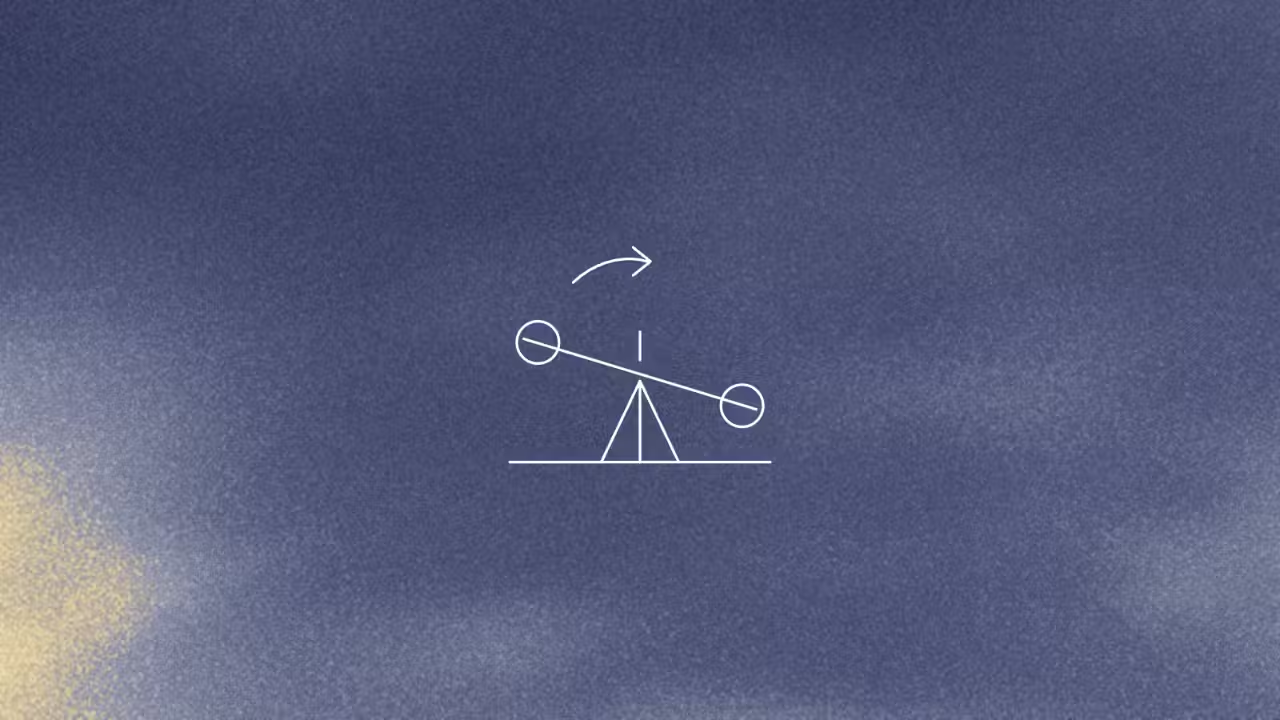
The result is a characteristic pattern of fluctuating muscle weakness. A movement may be possible at first but become harder after repeated use. Rest may restore some strength.
Symptoms can also vary from one day to another. Weakness is often more noticeable when someone is tired and may improve after rest. Stress, infections, and certain medicines can also worsen symptoms for some people.
For more detail on the biology behind MG, read about antibodies involved in myasthenia gravis.
{{get-started}}
Which parts of the body can myasthenia gravis affect?
MG can affect muscles controlling the eyes, face, speech, swallowing, neck, limbs, and breathing. The exact pattern and severity differ between individuals.
Eyes and eyelids
Weakness in the muscles around the eyes can cause:
- drooping of one or both eyelids, known as ptosis
- double vision, known as diplopia
- difficulty keeping the eyes open for prolonged periods
For some people, weakness remains limited to the eye muscles. This is known as ocular myasthenia gravis.
Read more about how MG can affect vision and the eyelids.
Face, jaw, throat, and voice
MG can affect the muscles used for speaking, chewing, and swallowing. This may lead to:
- chewing becoming harder during a meal
- difficulty swallowing food or liquids
- choking
- quieter, slurred, hoarse, or nasal-sounding speech
- changes in facial expression
These symptoms can make eating more tiring and can affect conversations as the day progresses.
There is more information about swallowing difficulties linked with MG.
Neck, arms, and legs
Weakness in the neck and limbs can make everyday movement more demanding.
Examples include difficulty:
- holding the head upright
- raising the arms to wash or dry hair
- brushing teeth
- getting up from a chair
- climbing stairs
- carrying shopping
- walking longer distances
Qualitative research into daily life with generalized MG has identified walking, grooming hair, showering, and brushing teeth among the activities that can be affected.
Breathing muscles
MG can also weaken muscles involved in breathing.
Shortness of breath may occur, and severe respiratory weakness can develop during a myasthenic crisis. Severe or worsening breathing problems require urgent medical attention.
Why can fatigue be difficult to explain?
Fatigue in MG can involve both muscle fatigability and a broader feeling of exhaustion.
Muscle fatigability describes a muscle becoming weaker with repeated activity. General fatigue is the subjective feeling of physical or mental exhaustion.
Research has found that fatigue can have a substantial impact on daily functioning and quality of life in MG.
This helps explain why someone may feel completely drained even when the most visible weakness affects only a particular part of the body.
How can myasthenia gravis affect work and daily responsibilities?
MG can make work and household responsibilities less predictable because the amount someone can comfortably do may change during the day.
Research into everyday experiences with generalized MG describes increased planning, changes to work, difficulty completing household activities, and reduced independence.
At work, challenges may be more noticeable in roles involving:
- prolonged standing or walking
- repeated lifting
- extended speaking
- driving
- physical tasks
- long or irregular shifts
Someone may be able to complete an activity in the morning but find the same task much harder later.
At home, ordinary activities such as showering, dressing, preparing food, vacuuming, carrying laundry, or styling hair can also consume significant energy.
Qualitative research has also described people needing to plan daily and social activities more carefully and adapt tasks such as shopping, cooking, housework, and hobbies.
How can MG affect eating and social activities?
MG can make meals and social plans more demanding when chewing, swallowing, speaking, or facial muscles become weaker.
Some people describe adapting meals when chewing becomes tiring. Others need more time to eat or find that swallowing difficulties affect which foods feel manageable.
Social situations can also become harder when symptoms fluctuate. Someone may have enough strength when making plans but feel very different by the time the event arrives.
Research into daily life with MG describes effects on eating, relationships, family life, hobbies, and participation in social activities.
Changes in speech or facial expression can add another layer. A quieter or altered voice may be misunderstood as disinterest or tiredness, while facial weakness may not reflect how someone feels emotionally.
What do conversations in the mama health app reveal about daily life with MG?
Qualitative conversations in the mama health app show that fluctuating symptoms can create practical challenges that are difficult to capture in a short medical appointment.
Recurring themes include:
- planning activities around periods when strength feels more available
- breaking household and self-care tasks into smaller steps
- resting before or between demanding activities
- adapting meals when chewing or swallowing becomes tiring
- changing or cancelling plans when weakness increases
- finding words to explain fluctuations to doctors, family, friends, or colleagues
- wanting to understand how others describe similar day-to-day situations
Another recurring theme is the difficulty of explaining symptoms that change from hour to hour. Someone may feel relatively strong during an appointment but struggle significantly later in the same day.
People also describe wanting practical language for explaining these changes to healthcare professionals and loved ones.
These are qualitative themes rather than prevalence estimates. They reflect experiences that appear in conversations and do not mean everyone with MG will experience the same symptoms, limitations, or coping strategies.
Published qualitative research describes many similar themes, including difficulties with work, walking, grooming, showering, eating, relationships, social activities, fatigue, swallowing, and heat sensitivity.
Seeing how others describe similar situations can help someone put their own experiences into words and prepare topics they may want to discuss with a healthcare professional.
How can people adapt daily activities around fluctuating weakness?
Pacing, planning, and adjusting the environment can make some activities easier to organise around changing strength levels.
Qualitative research describes people breaking activities into smaller sections, scheduling breaks, changing plans, and allowing more time for everyday tasks.
Examples may include:
- doing more demanding tasks during stronger periods of the day
- dividing cleaning or cooking into shorter stages
- sitting for tasks that do not need to be done standing
- choosing lighter household items where appropriate
- building rest into longer activities
- leaving extra time for meals
- avoiding several physically demanding tasks in the same period
Heat sensitivity is also described in research and in experiences shared through the mama health app. Individual responses vary, so personal observations can be useful to discuss with a healthcare professional.
Exercise and movement do not need to follow an all-or-nothing approach. The type and intensity that are appropriate depend on individual symptoms, overall health, and medical advice.
How can MG affect emotional wellbeing and identity?
MG can affect emotional wellbeing because unpredictability, reduced independence, and changes to work or social activities may alter everyday life.
Research has described emotional effects alongside physical, social, professional, and financial consequences.
Some people describe frustration when their abilities change from one day to another. Others find it difficult when weakness is invisible or when last-minute changes are interpreted as unreliability.
Changes to work, exercise, hobbies, relationships, and independence can also influence how someone sees themselves.
Read more about emotional wellbeing alongside myasthenia gravis.
Persistent anxiety, low mood, or emotional distress can be discussed with a GP, neurologist, or mental-health professional.
Can medicines or other factors make MG symptoms worse?
Some medicines, infections, stress, tiredness, and other circumstances can worsen MG symptoms in some individuals.
Because medication effects vary, do not stop a prescribed medicine without speaking with the healthcare professional responsible for your care.
If you are starting a new medicine or preparing for a medical or dental procedure, you could tell the healthcare professional involved that you have MG and ask whether the medicine is appropriate.
See the mama health guide to medicines that may require extra consideration with MG.
When can myasthenia gravis become an emergency?
Severe or rapidly worsening breathing or swallowing difficulty can be an emergency and needs immediate medical assessment.
A myasthenic crisis occurs when respiratory muscle weakness becomes severe enough to threaten breathing.
Seek urgent emergency help if there is:
- severe or worsening difficulty breathing
- severe difficulty swallowing
- inability to manage saliva or repeated choking
- rapidly increasing weakness accompanied by breathing or swallowing problems
In the UK, call 999 for severe or worsening breathing or swallowing difficulties. In other countries, contact the local emergency service.
What could you ask your MG care team?
You could use appointments to discuss which parts of daily life are becoming difficult and what support may be appropriate.
Questions could include:
- “Which changes in my symptoms are most useful to tell you about?”
- “What warning signs mean I need urgent medical help?”
- “Could any of my medicines affect MG?”
- “Could physiotherapy or occupational therapy be relevant to the activities I struggle with?”
- “Could speech and language support be useful for swallowing or speech difficulties?”
- “What information would be useful for me to bring to appointments?”
- “Are there local rules I need to know about if MG affects my ability to drive?”
Recording specific examples, such as when chewing becomes difficult, how long an activity takes, or which tasks become harder later in the day, can make these conversations more concrete.
How can mama health support reflection on everyday MG experiences?
mama health offers a space where you can access information and insights shared by others who have been where you are, helping you feel less alone in your experience. The mama health app is there for you 24/7, so you can reflect on your day-to-day experiences whenever you need support or guidance.
This can be useful when MG changes from one day to another and it is difficult to remember every detail during a short appointment.
mama health does not diagnose MG, monitor disease progression, recommend treatment, or replace medical advice. Information based on other people's experiences is not a prediction of what will happen to you.
What is the main takeaway?
Myasthenia gravis can affect the body through fluctuating weakness of the eyes, face, throat, neck, limbs, and breathing muscles. Its impact on daily life can also extend into work, meals, self-care, movement, relationships, and emotional wellbeing.
The amount of planning behind these activities is often invisible. Research and qualitative experiences show why seemingly simple tasks may require rest, adaptation, or a change of plans.
Understanding these day-to-day effects can make it easier to describe your experience, prepare useful questions for healthcare professionals, and recognise that MG does not look the same from one person or one day to the next.
This content is informational and is not medical advice.
mama health offers information and support and does not replace your doctor.