Every day with Graves' Disease raises a new question

A free app for everything Graves' Disease asks of you, grounded in medical science and the experience of others, so you don't have to figure it out alone.

One app for everything Graves' Disease asks of you
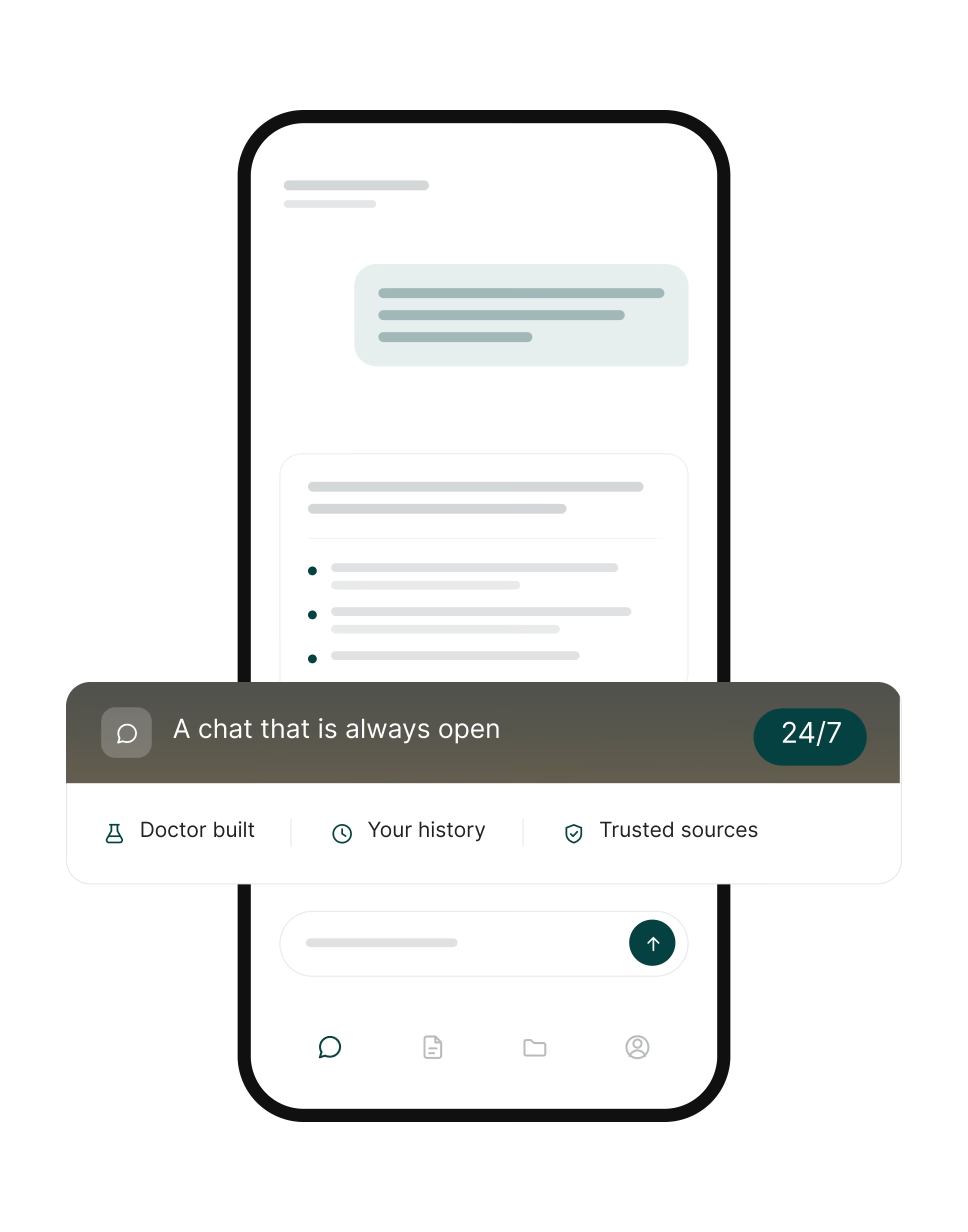
Personalized answers before, after, and in between every appointment.
What to know about Graves' Disease
The basics on causes, types, symptoms, treatment and diagnosis, written from medical guidelines and reviewed by our in-house doctors. Open the parts that apply to you.
What is Graves' disease?
Graves' disease is an autoimmune condition and the most common cause of hyperthyroidism. The immune system produces antibodies that stimulate the thyroid gland, causing it to release excessive thyroid hormones and accelerate many body functions.
It can affect the heart, bones, muscles, fertility, pregnancy and eyes. Graves' may occur at any age but is more common in women and often develops between early and middle adulthood. An enlarged thyroid is one of the more visible signs, covered in mama health's guide to diffuse goiter.
What causes Graves' disease?
Graves' develops when thyroid-stimulating immunoglobulins bind to the thyroid-stimulating hormone receptor and activate the gland. Why this autoimmune response begins is not fully understood.
Genetic susceptibility interacts with environmental and hormonal factors, and mama health's guide to the genetic factors in Graves' disease covers what is known about the inherited part. Smoking, major stress, pregnancy or the postpartum period, and other autoimmune conditions may all influence risk or activity.
Treatment options
Treatment options include antithyroid medicines, radioactive iodine therapy and thyroid surgery. Beta blockers may be prescribed temporarily to control tremor, palpitations and other symptoms while thyroid hormone levels are brought under control.
The right treatment depends on age, symptom severity, thyroid size, pregnancy plans, eye involvement, other medical conditions and personal preference. Long-term monitoring is needed, because treatment may lead to hypothyroidism or Graves' may return. Where thyroid removal is being considered alongside eye involvement, thyroid removal and thyroid eye disease covers what that decision involves. Questions between appointments can be put through mama health, which is free Graves' disease support grounded in medical science and the experience of others.
Living with Graves' disease
Regular thyroid blood tests are needed to adjust treatment and avoid both excess and insufficient thyroid hormone. It is worth telling clinicians about all medicines and supplements, because iodine-containing products and some drugs affect thyroid function.
Stopping smoking matters particularly here, because smoking increases both the risk and the severity of thyroid eye disease, and support to stop is available through the thyroid team rather than something to manage alone. Pregnancy is best planned with specialist guidance, since uncontrolled hyperthyroidism and some treatments can affect both parent and baby. Food and iodine questions come up constantly, covered in what actually works with a Graves' diet, and nausea is a common and under-discussed symptom, covered in thyroid conditions and nausea. What changes between blood tests can be kept in one place in the mama health app, a free Graves' disease app built with in-house doctors.
What does treatment achieve?
Graves' disease is treatable, and most people reach normal thyroid hormone levels. Some enter remission after a course of medication, while others need definitive therapy and then lifelong thyroid hormone replacement, which is a straightforward daily treatment rather than a worse outcome. Eye symptoms may follow a course partly independent of thyroid control, which is why they are assessed separately.
Who is at risk of developing Graves' disease?
Risk factors include female sex, a family history of Graves' or another autoimmune condition, smoking, pregnancy or recent childbirth, major physical or emotional stress, and another autoimmune condition such as type 1 diabetes or rheumatoid arthritis. Graves' can also develop in children, covered in mama health's guide to Graves' disease in children.
Untreated hyperthyroidism can lead to atrial fibrillation, heart failure, osteoporosis, muscle wasting, pregnancy complications and thyroid storm, which is why treatment and monitoring continue even once symptoms settle.
What are the symptoms of Graves' disease?
Symptoms may include unexplained weight loss despite normal or increased appetite, heat intolerance, sweating, rapid or irregular heartbeat, tremor, anxiety, irritability, insomnia, frequent bowel movements, muscle weakness, menstrual changes, reduced fertility and an enlarged thyroid.
Some people develop gritty, painful, bulging or double-vision eye symptoms, and thickened skin over the shins. The eye symptoms are a related but separate condition, covered in thyroid eye disease. Disturbed sleep is one of the symptoms people find hardest, and mama health's guide to chronic insomnia covers that side of it.
How is Graves' disease diagnosed?
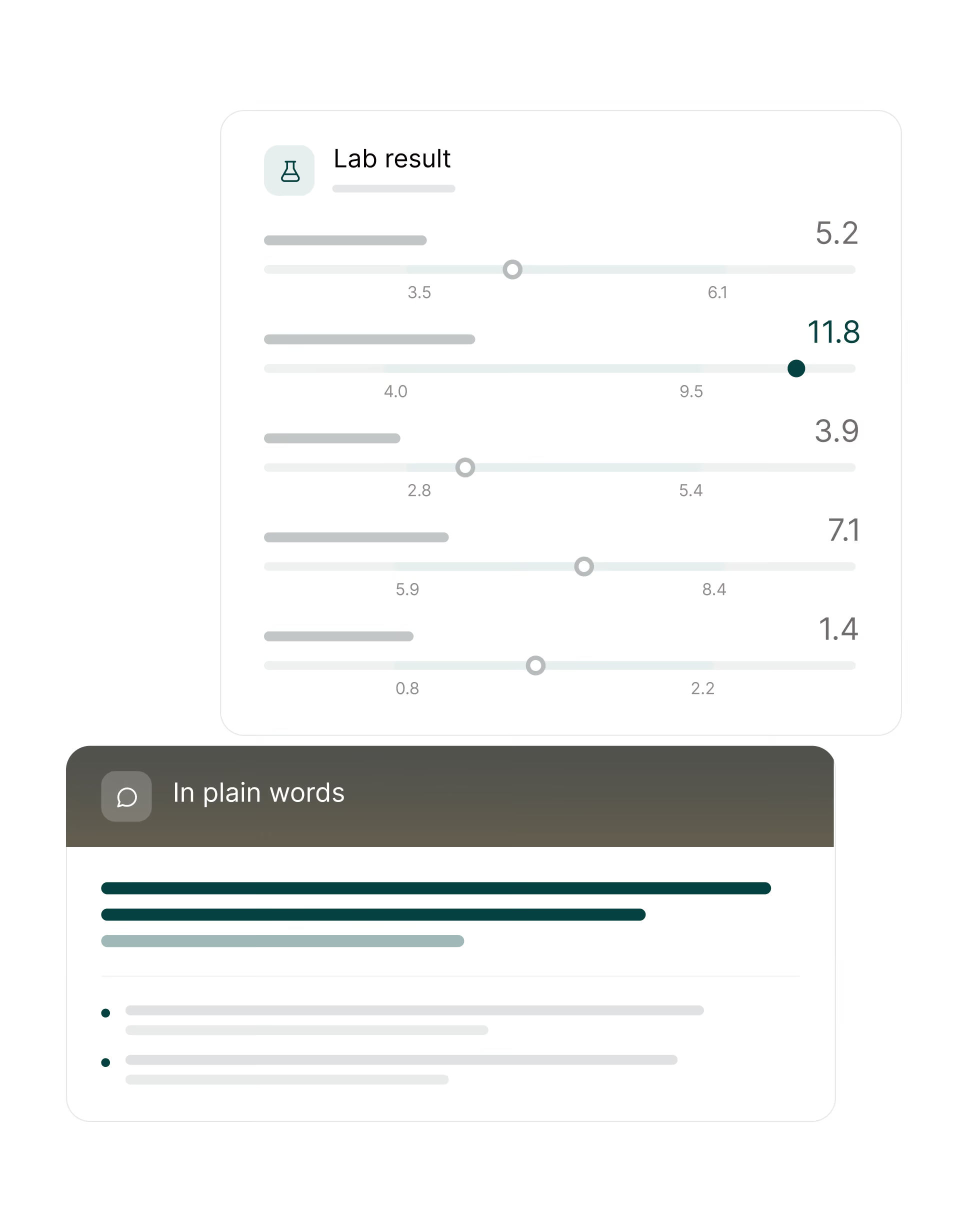
Diagnosis begins with measurement of thyroid-stimulating hormone (TSH), free thyroxine (free T4) and sometimes triiodothyronine (T3), alongside thyroid receptor antibody testing. Graves' is supported by positive TSH-receptor antibodies or thyroid-stimulating immunoglobulins.
When antibody results are unavailable or unclear, radioactive iodine uptake can show diffuse increased thyroid activity. Doppler ultrasound may show increased blood flow and is useful when radiation should be avoided, including during pregnancy, and mama health's guide to thyroid ultrasound covers what the scan involves. Electrocardiography and bone or liver testing may be added according to symptoms. Results and letters can be read back in plain language in the mama health app, a free Graves' disease support app.
What stands behind mama health
Medical oversight, safeguards around your data, and a clear purpose for every anonymized experience shared.
.avif)







Reviewed by our doctors
Our doctors review the medical sources behind every AI answer. Designed for high accuracy from your first chat.

Anonymized for good
Your personal data is encrypted and never shared. We turn it into anonymized insights. All under strict European data standards.

Contributing to research
Partners learn from anonymized patient experiences. That helps push research and better treatments forward.
All conditions we add to mama health go through careful checks.



Frequently asked questions
The report will appear in your inbox shortly✅
If you would like to explore how real-time patient insights can strengthen your commercial strategies, book a chat through the link below.