Every day with Atopic Dermatitis raises a new question

A free app for everything Atopic Dermatitis asks of you, grounded in medical science and the experience of others, so you don't have to figure it out alone.

One app for everything Atopic Dermatitis asks of you
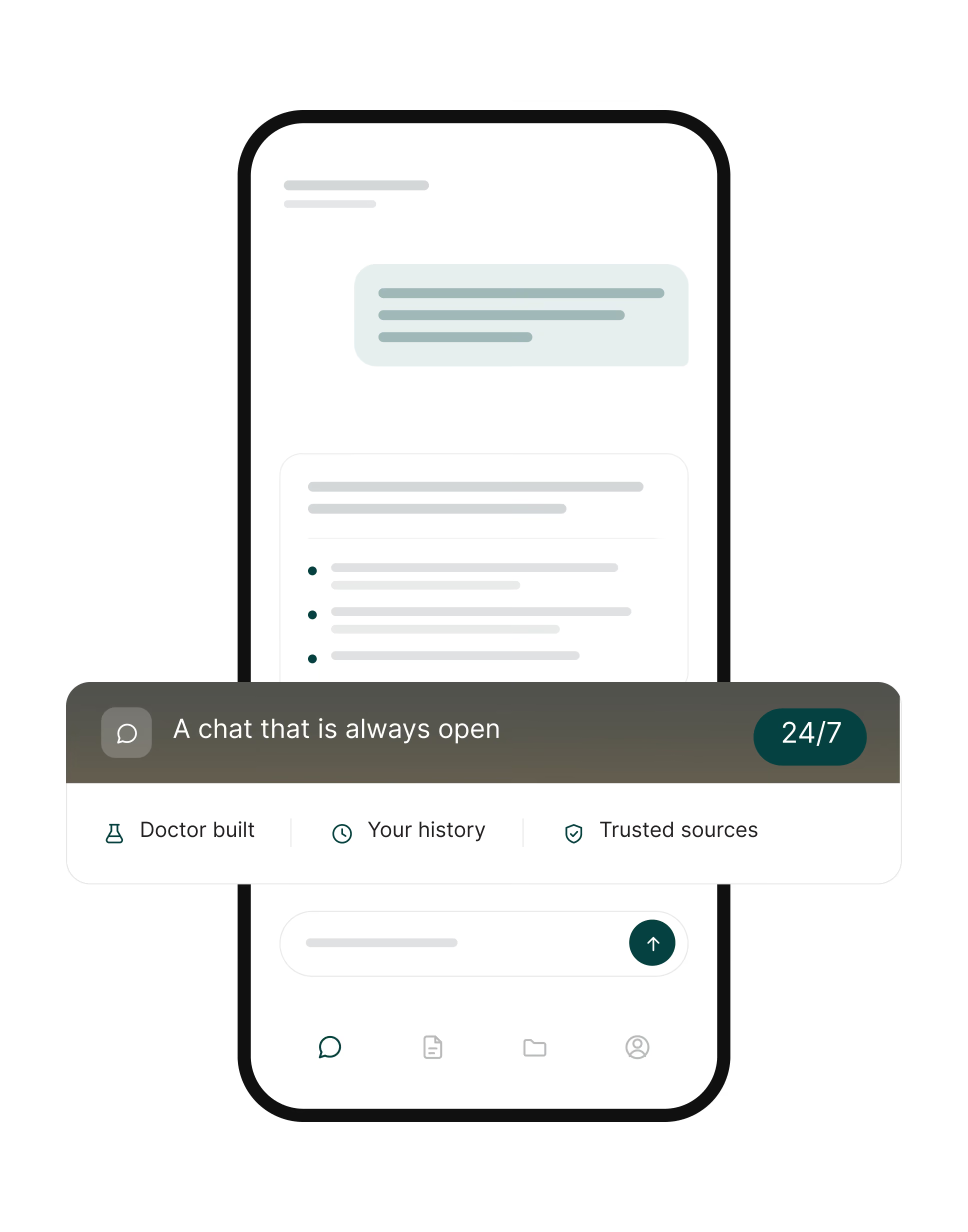
Personalized answers before, after, and in between every appointment.
What to know about Atopic Dermatitis
The basics on causes, types, symptoms, treatment and diagnosis, written from medical guidelines and reviewed by our in-house doctors. Open the parts that apply to you.
What is atopic dermatitis?
Atopic dermatitis (AD) is a chronic inflammatory skin condition characterized by intense itching, dryness and recurrent eczema. It often begins in childhood but can develop or persist at any age.
It follows a relapsing course, with periods of relative control and flares. Atopic dermatitis is not contagious and may affect sleep, school, work, mental health and quality of life. mama health's guide to the difference between eczema and atopic dermatitis covers how the two terms relate.
What causes atopic dermatitis?
Atopic dermatitis results from a combination of skin-barrier impairment, immune dysregulation, genetic susceptibility and environmental influences. Reduced barrier function allows moisture loss and lets irritants, allergens and microbes penetrate more easily.
Flares may be worsened by dry weather, heat, sweating, fragrances, harsh cleansers, certain fabrics, stress, infection and scratching. Food allergy can coexist, especially in young children with severe eczema, but is not the usual cause. Individual triggers are common and often surprising, and mama health's guide to coffee and eczema is one example of a question that comes up a lot.
Treatment options
Foundational treatment includes daily moisturization, gentle bathing, trigger reduction and topical anti-inflammatory therapy such as corticosteroids, calcineurin inhibitors or other nonsteroidal agents. Wet-wrap therapy and phototherapy help selected patients. mama health's guide to the best creams for eczema covers what people use, and treatments for eczema on the face covers the areas where standard products are unsuitable.
Moderate-to-severe atopic dermatitis may require biologic medicines or oral targeted immune therapies, and dupilumab covers one of the main options. Treatment plans should include maintenance therapy, flare instructions, infection management and monitoring for medication effects. Questions between appointments can be put through mama health, which is free eczema support grounded in medical science and the experience of others.
Living with atopic dermatitis
Foundational care is built around a fragrance-free moisturizer applied at least daily and soon after bathing, lukewarm water, mild cleansers only where needed, breathable clothing, and prescribed anti-inflammatory treatment started early in a flare.
Sleep disruption and scratching create a self-reinforcing cycle, and the itching at night is often what sends someone looking for help in the first place. Short nails, cool compresses, treating nighttime itch appropriately and addressing stress or anxiety all reduce skin damage. mama health's guide to psychological support and eczema covers what has been studied. What changes from week to week can be kept in one place in the mama health app, a free eczema app built with in-house doctors.
When to seek emergency care
Seek urgent medical attention for rapidly spreading painful skin, fever, clusters of uniform blisters, punched-out erosions (small round open sores), eye involvement, extensive pus or crusting, or marked swelling. These signs may indicate eczema herpeticum or a serious bacterial infection.
Prognosis
Atopic dermatitis can often be controlled but may require long-term maintenance. Many children improve with age, while some continue to have symptoms into adulthood or develop hand eczema, facial or occupational eczema. mama health's guide to whether eczema goes away covers what is known about that.
Who is at risk of developing atopic dermatitis?
Risk factors include a personal or family history of atopic dermatitis, asthma or allergic rhinitis; filaggrin and other skin-barrier gene variants; dry or sensitive skin; urban or polluted environments; and frequent exposure to irritants.
Complications include bacterial or viral skin infection, sleep loss, anxiety or depression, eye problems, contact allergy, and adverse effects from inappropriate treatment.
What are the symptoms of atopic dermatitis?
Symptoms include intense itching, dry and sensitive skin, red or discolored patches, scaling, cracks, small bumps, oozing or crusting during flares, and thickened skin from chronic scratching. Distribution varies with age and may involve the face, neck, hands, wrists, ankles, and folds of the elbows and knees.
Because eczema looks different depending on where it appears, mama health has guides to a rash on the neck, a rash on the stomach and blotchy skin.
How is atopic dermatitis diagnosed?
A healthcare professional diagnoses atopic dermatitis by reviewing itch, age at onset, flare pattern, family history, triggers, treatment response and the characteristic distribution of eczema. Examination also looks for infection, lichenification (thickened skin from long-term scratching), eye involvement and other atopic conditions.
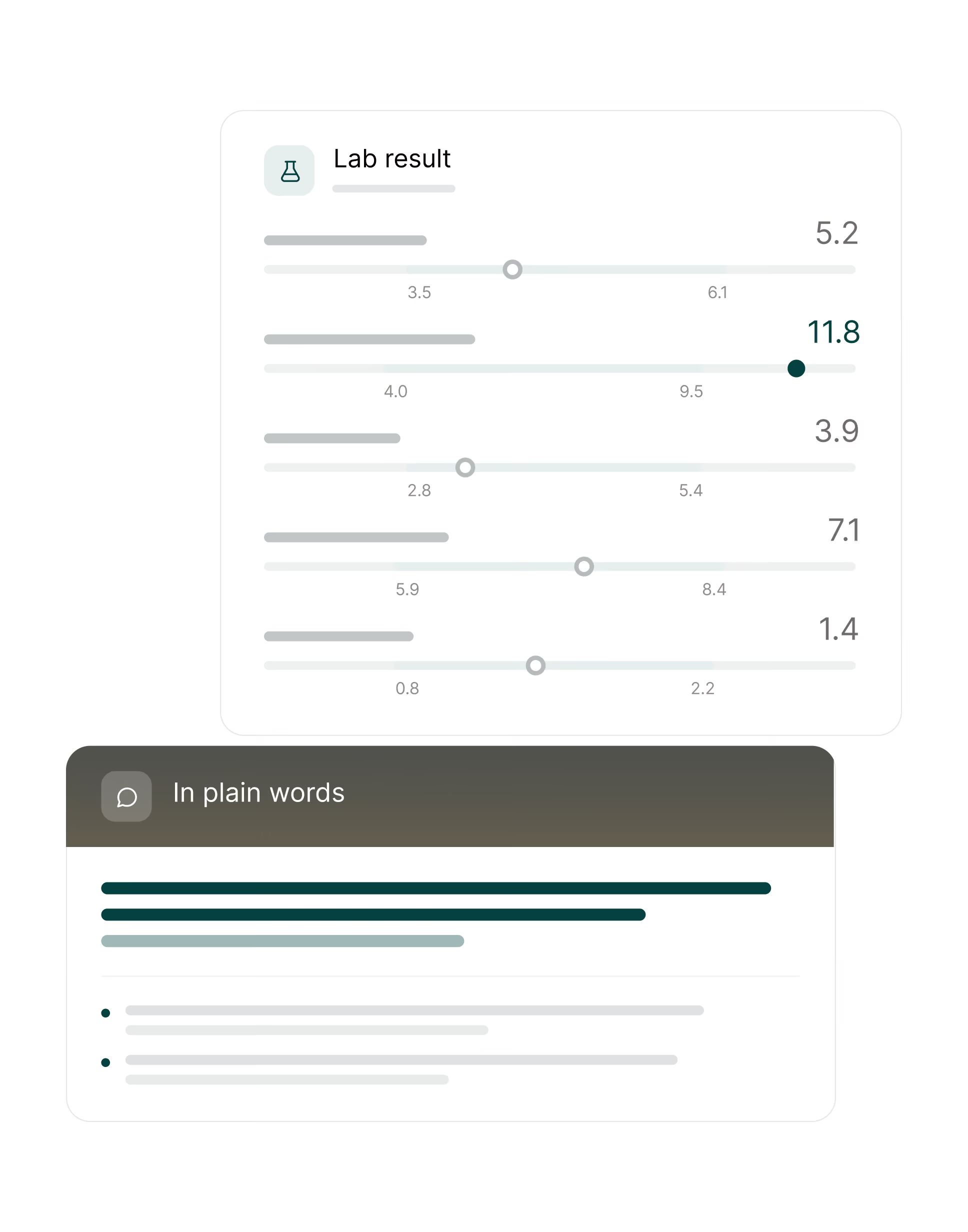
There is no single diagnostic blood test. Allergy blood tests are not routinely required and cannot by themselves diagnose the condition. Patch testing may identify coexisting allergic contact dermatitis, while swabs, skin scraping or biopsy are reserved for suspected infection or an alternative diagnosis. Results and letters can be read back in plain language in the mama health app, a free atopic dermatitis support app.
What stands behind mama health
Medical oversight, safeguards around your data, and a clear purpose for every anonymized experience shared.
.avif)







Reviewed by our doctors
Our doctors review the medical sources behind every AI answer. Designed for high accuracy from your first chat.

Anonymized for good
Your personal data is encrypted and never shared. We turn it into anonymized insights. All under strict European data standards.

Contributing to research
Partners learn from anonymized patient experiences. That helps push research and better treatments forward.
All conditions we add to mama health go through careful checks.



Frequently asked questions
The report will appear in your inbox shortly✅
If you would like to explore how real-time patient insights can strengthen your commercial strategies, book a chat through the link below.