Responsible AI in Healthcare: what patient associations want industry to hear

Responsible AI in healthcare: What patient associations want industry to hear
A question about treatment can come up weeks before the next appointment. For someone who has spent years trying to get their symptoms taken seriously, an AI tool that listens and offers a possible next step can bring real hope. How can healthcare professionals and industry teams respond to that need while helping patients understand what they can rely on?
At mama health’s Patient Voice Forum 2026, held in Berlin on October 24, 11 patient associations from five European countries explored where AI could support patients and what would make it trustworthy. Participating organizations included Europa Uomo Italia, ÆNDO, EPSS, DAAB, SVS, EpaC-ETS, and more.
Three priorities ran through the discussions. Make reliable health information easier to access, give patients meaningful control over their data, and involve patient associations while decisions about AI tools can still change. These findings reflect the experiences and perspectives shared at the forum.
Where could AI improve the patient journey?
Endometriosis came up repeatedly. Participants described paths to diagnosis lasting up to 10 years, often starting in adolescence, when menstrual pain was sometimes dismissed. They saw potential for AI to help people organize their symptom histories and bring clearer information to a clinician who can decide whether to investigate further.
Advocates also saw a role for AI between appointments. It could help patients organize notes, put difficult experiences into words, and prepare the questions they most want to ask. For people who face financial barriers or live where doctors are scarce, easier access to understandable health information could help them make sense of their concerns and prepare to seek care. Participants flagged language, cost, internet access, and digital confidence as factors that will determine who benefits.
What makes AI-powered patient support trustworthy?
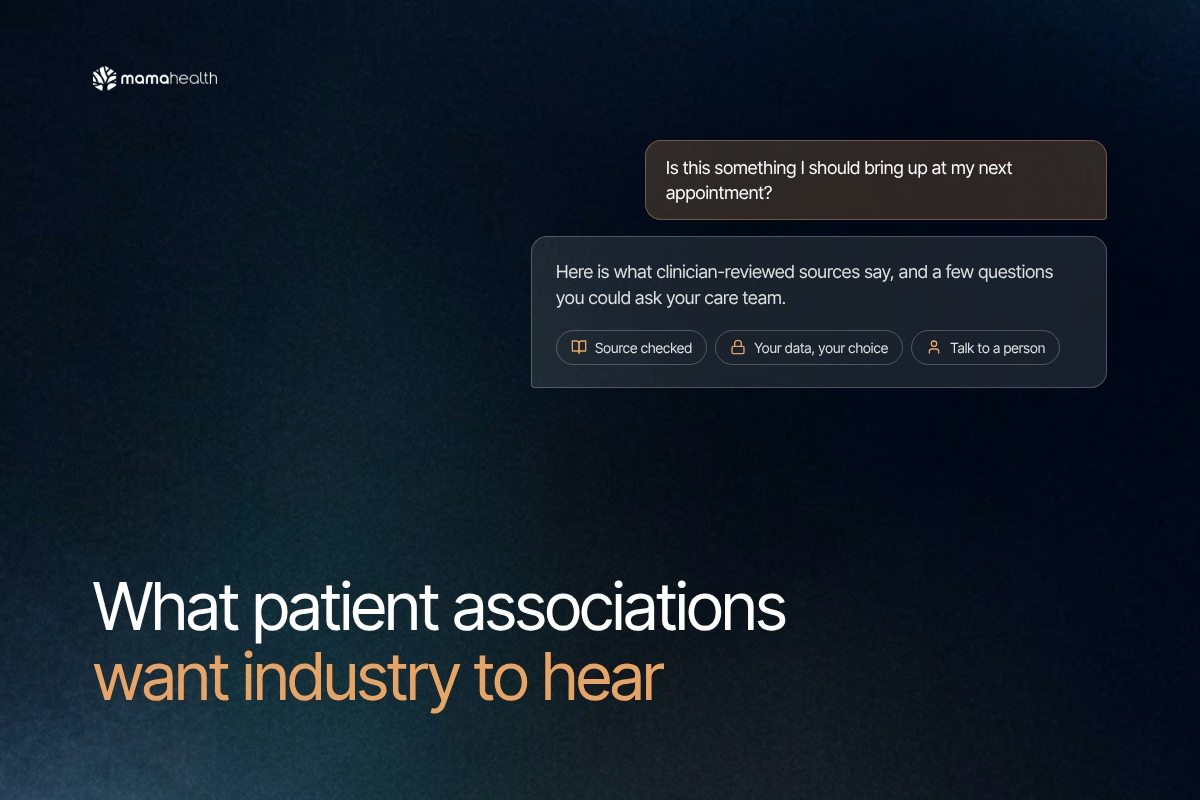
Participants wanted to know where an answer came from, who could access their health data, and whom they could turn to when a question needed human judgment. They also wanted to be able to bring AI-generated information to an appointment without feeling judged, especially when it differed from what they had heard from their care team.
One Swiss association shared a practical example. Its assistant drew on clinician-reviewed content and directed questions outside its scope, including medication decisions, to a 24-hour human hotline. The association retained control of the data. For teams designing digital patient support programs, the example shows what a clear handoff can look like when a patient needs more help.
What can industry teams take from the Patient Voice Forum?
For teams in Medical Affairs, Patient Engagement, and Digital Health, the forum raised questions that can shape patient education, support programs, and advocacy partnerships.
- Involve patient associations early and keep them involved after launch. Ask which moments in the patient journey need better support while there is still time to change the design. Give associations time to review it and room to offer candid feedback.
- Test whether patients can act on the information. Can they check the source, understand how it applies to their situation, and tell when to contact their care team? Include people with different languages, accessibility needs, and levels of digital confidence in that testing.
- Make health data consent understandable. Explain what the tool collects, who can see it, and how it may be used. Give patients a meaningful choice about participation and any further use of their information.
Patient associations know where people struggle to find reliable answers, what they may hesitate to bring up in a consultation, and what makes support practical in everyday life. We’re grateful to the advocates who brought that experience to the forum and shared what they want industry and developers to hear.
Read the full Patient Voice Forum 2026 report for all six recommendations from the discussions, including what participants asked of industry on accessibility, consent, and the independence of patient associations.