How a global immunology leader found out which of its patients are ready to ask for an advanced therapy, before it spent the campaign budget

- 2,000 patients, in their own words
- 25.0% / 10.0% activated toward advanced therapy: the target segment versus the unbothered segment
- 2 in 3 patients, in every segment, don't know their condition has no trigger
About the client
The client is a global pharmaceutical company and market leader in immunology. The engagement ran through its patient engagement and patient advocacy teams ahead of the launch of a new therapy for a chronic condition. The therapy is specialist-prescribed and aimed at a defined patient: high severity, uncontrolled on standard treatment, already through a therapeutic escalation.
The challenge
The global team had already segmented patients into four personas, built from strategic segmentation needs and clinical trial determinants, and validated in markets that had nothing to do with the ones now preparing to launch.
Here's the problem with that. A patient persona looks the same on paper in Germany, Japan or Brazil: same severity, same treatment history, same escalation. But patients in those three countries don't behave the same way when their treatment stops working. One goes back to the specialist and asks for something new. One waits for the doctor to bring it up. One quietly gives up. Culture and the health system around them decide that, and the persona grid can't see it.
An awareness campaign built on the global personas, without checking them against the local market, spends on a patient who may not behave the way the deck says they do. And with no baseline on how aware or activated patients were before the campaign, there's no way to measure its success.
The solution
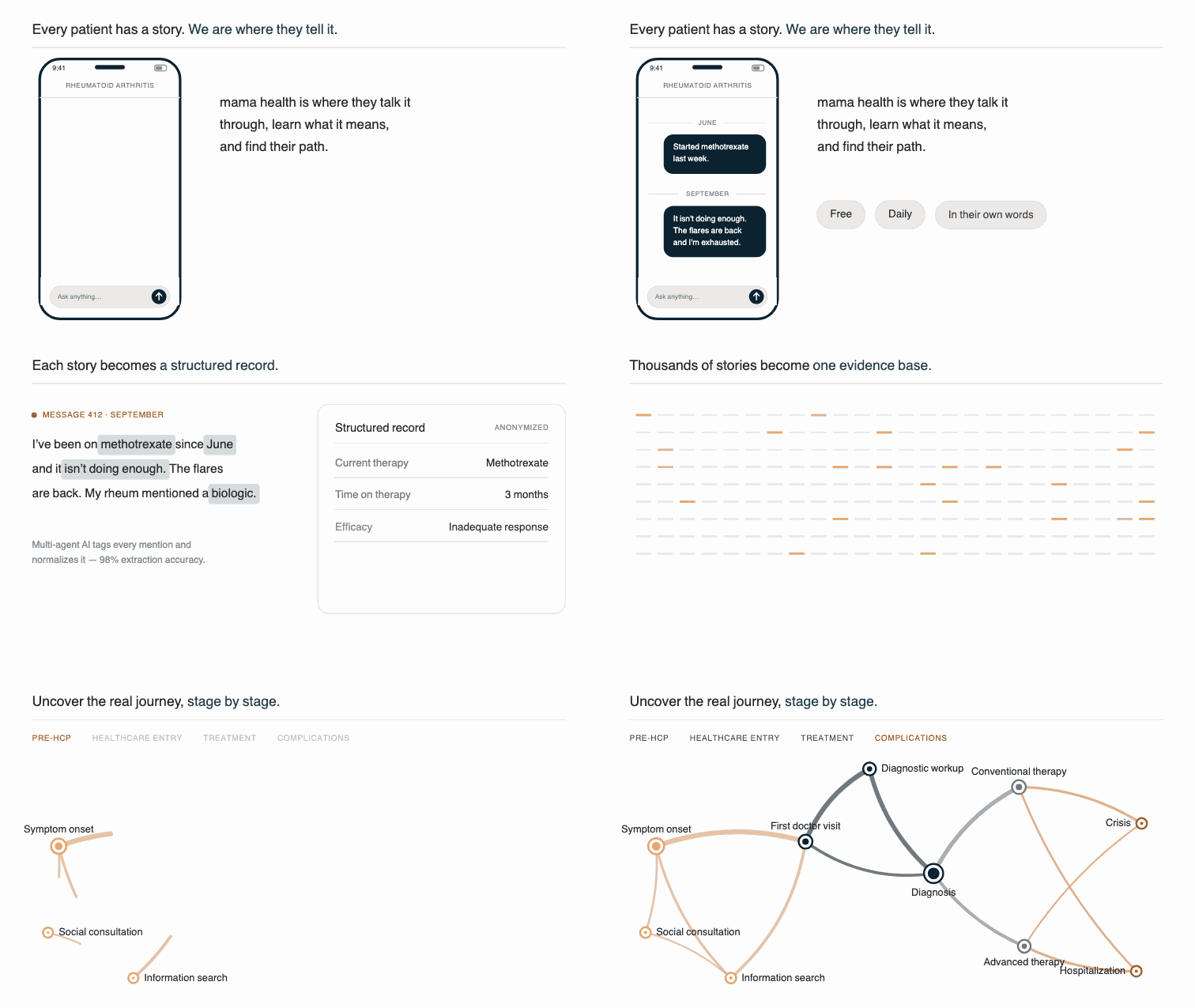
mama health runs AI-moderated conversations with patients living with the condition, in their own language. Patients tell their story rather than ticking boxes. The conversations are structured, de-identified and aggregated into the Patient Journey Analytics Platform, which the local teams query directly.
Persona validation
We took the client's own global framework, mapped real local patients against the same attributes, and showed how the local population distributes across the four groups, where behavior differs from the global assumption, and who falls outside the framework altogether.
The Patient Empowerment Index
With the therapy still in approval, we built an index with the local team, computed from the conversations, that tracks three things over time:
- Awareness: how conscious the patient is of the condition's real impact.
- Engagement: how open the patient is to a therapeutic escalation.
- Activation: how proactive the patient is about getting to a clinician and asking for advanced therapy.
The index is scored per patient and rolled up by persona, so the client can watch each segment move and see whether its own campaigns moved it.
Key insights
All four global personas exist in the local market, but not in the proportions the deck said
44.0% of classifiable patients were the target segment, the desperate seekers, against a global range of 17.0% to 31.0%. The client had unusual depth on exactly the patient it plans to launch to.
Some patients don't fit the framework at all
One in nine landed in an Other group, and that group had the highest share of men. The global personas may not describe how men talk about this condition.
The target segment is ready to consider, and stalls before acting
Desperate seekers show the highest openness to new options and to scheduling regular specialist visits. But most are curious about other treatments and haven't decided to act. Their barriers are confidence and navigation, not motivation.
Awareness and activation, by segment
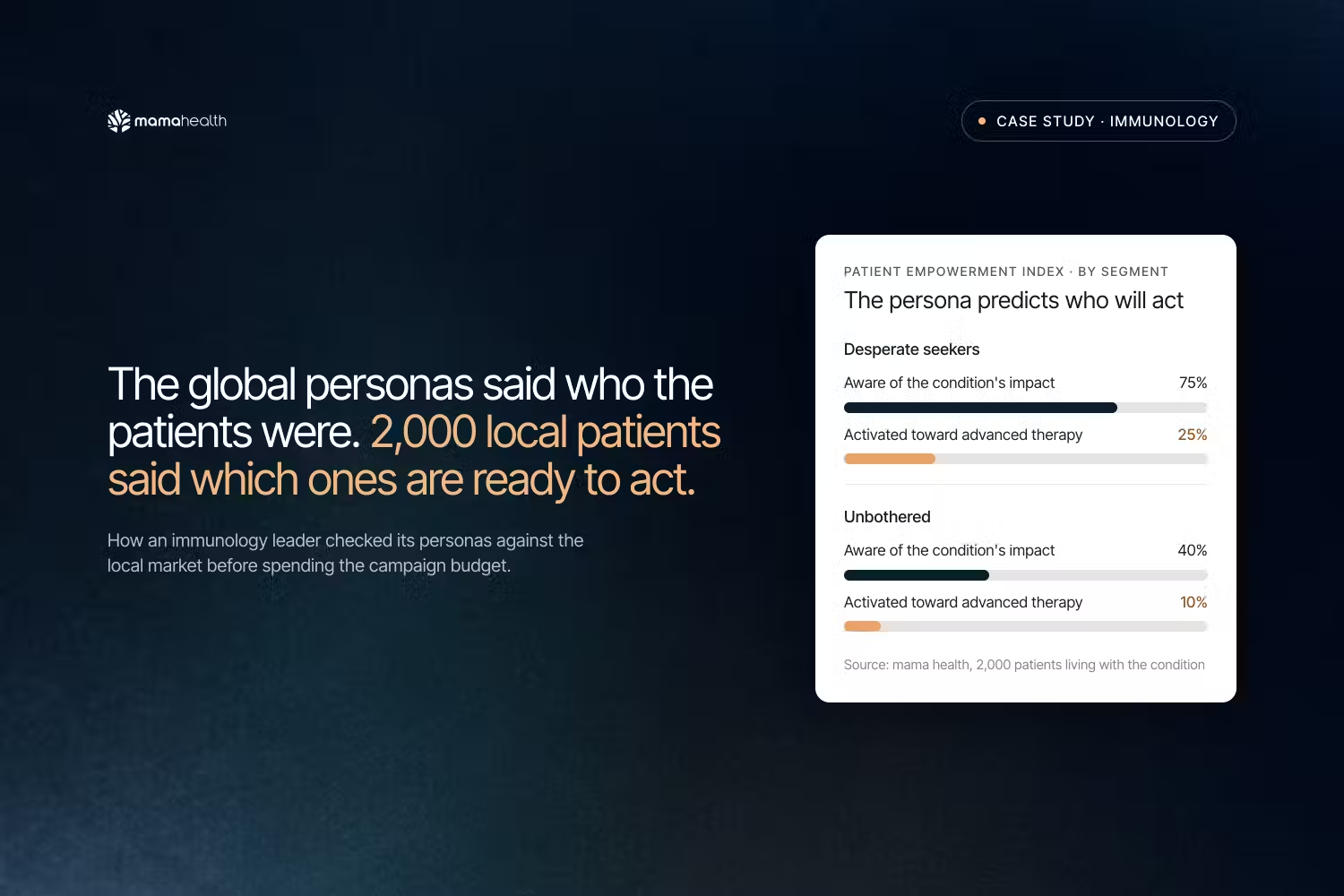
- Desperate seekers: 75.0% aware of the condition's impact, 25.0% activated toward advanced therapy.
- Unbothered: 40.0% aware of the condition's impact, 10.0% activated toward advanced therapy.
The persona predicts who will act.
One thing every segment gets wrong
Two out of three patients, in every persona, believe their condition has a trigger. It doesn't, and that belief drives anxiety and self-treatment that doesn't work. It's an education message that applies to everyone, not one segment.
Core insight
The global personas told the local team who its patients were. The conversations told it how many of each it actually has, which ones it can't see, and where the target patient stops on the way to asking for a new treatment.
That last part is what an awareness campaign has to be built around.
Why it matters
For patient engagement, the campaign is being built with a patient association on a patient who has been checked against the local population, and the index is the measurement layer.
The client can see, before launch, which patients are ready to request a new treatment, which aren't yet aware enough to want one, and what separates them.