Pompholyx (Dyshidrotic Eczema): A Dermatologist's Guide to Lasting Relief


Those tiny, intensely itchy blisters on your fingers and palms? Pompholyx can turn simple daily tasks into painful challenges. If you've ever experienced these fluid-filled bumps along with cracked, peeling skin, you know exactly how frustrating this form of eczema can be.
Dyshidrotic eczema, also called pompholyx, actually affects up to 20% of people with hand eczema. This condition typically appears as small, intensely itchy blisters on the edges of fingers, palms, and sometimes soles of feet. The tiny bumps on hands can burst, leading to painful cracks and peeling that make everyday activities nearly impossible. Many sufferers wonder if these spots on fingers are contagious (they're not) and desperately search for lasting relief.
Fortunately, effective treatments exist for managing this challenging skin condition. This comprehensive guide explores everything from identifying triggers like stress-related eczema flares to proven treatment options that dermatologists recommend. Whether you're experiencing your first outbreak or have battled hand dermatitis for years, you'll find practical solutions to help heal your skin and prevent future episodes.
{{get-started}}
What is pompholyx (Dyshidrotic Eczema) and how does it start?
Pompholyx (also known as dyshidrotic eczema) is a distinctive skin condition characterized by small, deep-seated blisters that primarily affect the hands and feet. The name "pompholyx" comes from the ancient Greek word for "bubble," aptly describing its most recognizable feature. This chronic condition typically follows a pattern of flare-ups that last about 2-3 weeks before subsiding, though it often returns over months or years.
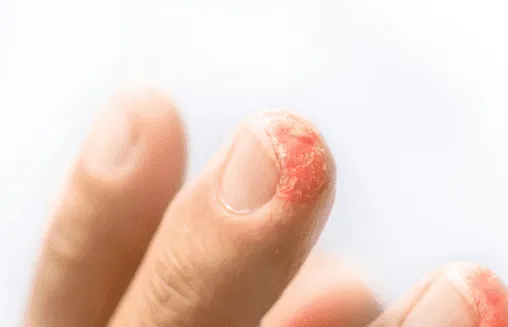
Common symptoms to watch for
The journey of pompholyx usually begins with a subtle warning. Many patients report a burning or prickling sensation in the affected area before any visible symptoms appear. Subsequently, small fluid-filled blisters (vesicles) develop, measuring approximately 1-2mm in diameter. These tiny blisters have a distinctive appearance:
- Intensely itchy, sometimes with burning sensations
- Small at first, but can merge to form larger blisters in severe cases
- Sometimes described as looking like "tapioca pearls"
- Initially clear fluid-filled, but can become cloudy if infected
As the condition progresses, the skin undergoes changes. After a few weeks, the blisters typically dry out, leading to peeling, scaling, and potentially painful cracks or fissures in the skin. In cases where infection develops, you might notice pain, swelling, and blisters that ooze pus or develop a golden crust.
Where it appears on the body
Unlike many other forms of eczema that can appear anywhere, pompholyx has a predictable pattern of distribution. It primarily affects:
- Sides of fingers and finger edges
- Palms of hands
- Soles of feet
- Toes
In more severe outbreaks, the condition may spread to the backs of hands and feet, though it remains confined to these areas and doesn't affect other body parts. Furthermore, pompholyx can impact the nail folds and surrounding skin, sometimes leading to nail changes (paronychia) and dystrophy if the condition persists.
How it differs from other types of eczema
Several key characteristics distinguish pompholyx from other eczema variants. First, its highly specific location sets it apart – while other forms can appear throughout the body, pompholyx remains strictly on hands and feet. Additionally, the distinctive small, deep-seated blisters differ from the more general redness and scaling seen in typical atopic dermatitis.
Moreover, pompholyx has unique triggers compared to other eczema types. While stress can exacerbate both conditions, pompholyx is particularly associated with:
- Exposure to certain metals (nickel, cobalt, chromium)
- Fungal skin infections
- Seasonal allergies
- Hot, humid weather
- Excessive sweating
It's worth noting that several conditions can mimic pompholyx, including contact dermatitis, tinea (fungal infections), palmoplantar pustular psoriasis, scabies, and even hand, foot and mouth disease. Consequently, proper diagnosis by a dermatologist is crucial.
Despite its challenging symptoms, pompholyx is not contagious – you cannot spread it to others or from one part of your body to another.
What causes pompholyx flare-ups?
Understanding what triggers pompholyx flare-ups is crucial for anyone struggling with this challenging skin condition. Although researchers haven't pinpointed the exact cause of pompholyx, numerous factors have been identified that can trigger or worsen outbreaks.
Environmental and lifestyle triggers
The environment plays a significant role in pompholyx flares. Many patients notice seasonal patterns, with symptoms worsening during spring and summer months when temperatures rise and humidity increases. This seasonal correlation isn't coincidental—warmer climates generally see more cases of pompholyx.
Occupational factors often contribute to flare-ups as well. People whose jobs require frequent hand washing or water exposure face higher risks. Healthcare workers, hairdressers, food service employees, and sanitation workers may experience more frequent episodes due to constant moisture exposure. Similarly, construction workers and others who handle cement regularly report increased flares.
Interestingly, ultraviolet light exposure—specifically UVA rays—can trigger outbreaks in some individuals, explaining why symptoms often worsen during sunnier months. Smoking tobacco has likewise been identified as a potential trigger for some patients.
Allergens and irritants to avoid
Contact with certain substances represents one of the most common triggers for pompholyx. Metals rank among the primary culprits, notably:
- Nickel (found in jewelry, zippers, coins, and many metal tools)
- Cobalt (present in vitamins, pigments, and metal alloys)
- Chromium (used in leather tanning, cement, and metal plating)
Household products containing harsh chemicals frequently aggravate symptoms. Soaps, detergents, cleansers, shampoos, and cosmetic products with fragrance additives can all spark flare-ups. Even seemingly harmless personal care items might contain irritants that provoke a reaction.
Essentially, anything that causes contact dermatitis may potentially trigger pompholyx in susceptible individuals. Some medications have also been implicated, including aspirin, birth control pills, and intravenous immunoglobulin therapy (IVIG).
The role of stress and sweating
Psychological factors, specifically stress, rank among the most reliable triggers for pompholyx flares. Fifty percent of people with pompholyx report that emotional stress directly precedes or coincides with their outbreaks. The mind-body connection is so strong that some patients have successfully managed their condition using biofeedback therapy and other stress reduction techniques.
Excessive sweating (hyperhidrosis) represents another major aggravating factor, affecting approximately 40% of pompholyx patients. The connection is so significant that doctors sometimes recommend botulinum toxin injections to reduce sweating in patients whose flares are primarily sweat-triggered.
Notably, fungal infections can coexist with and potentially trigger pompholyx. In particular, athlete's foot (tinea pedis) has been associated with dyshidrotic-like eruptions—sometimes even causing pompholyx to appear on the hands while the fungal infection affects only the feet.
For many individuals, flare-ups result from a combination of these factors rather than a single trigger. Identifying your personal triggers through careful observation and potentially with a dermatologist's help represents the first step toward managing this persistent condition.
How is pompholyx diagnosed and confirmed?
Diagnosing pompholyx requires professional medical evaluation, as several skin conditions can present with similar symptoms. Getting an accurate diagnosis is essential for effective treatment of those frustrating blisters on your hands and feet.
What to expect during a dermatology visit
The diagnostic journey typically begins with either your primary care provider or a dermatologist—a specialist in skin disorders. According to clinical practice, the diagnosis of pompholyx is primarily based on physical examination and your medical history, since the appearance and distribution pattern are usually distinctive.
During your appointment, the doctor will:
- Examine the affected areas of your skin carefully
- Ask about your symptoms' timeline and severity
- Inquire about personal or family history of eczema or allergies
- Discuss potential triggers in your environment or routine
Be prepared to answer questions about recent lifestyle changes that might contribute to your condition. Your doctor may ask:
"When did you first notice these symptoms?" "Are your symptoms constant or do they come and go?" "Have you recently started using new skin care products or jewelry?" "Do you work with materials like cement or cutting oils?" "Have you noticed a connection between stress and your flare-ups?"
It's important to mention if you have metal implants in your body or recently smoked tobacco, received vitamin B12 injections, or started new medications including aspirin or birth control pills—as these factors can sometimes trigger pompholyx outbreaks.
Tests used to rule out other conditions
Since no single laboratory test can definitively confirm pompholyx, doctors focus on ruling out conditions with similar symptoms. Firstly, your doctor might perform tests such as:
Skin scraping or KOH test: This simple procedure helps exclude fungal infections like athlete's foot or tinea manuum, which can mimic pompholyx symptoms.
Patch testing: If your dermatologist suspects an allergic cause, they may recommend patch testing—especially for chronic or persistent cases. This involves placing small amounts of potential allergens (commonly metals like nickel) on your skin to observe reactions. Patch testing is particularly important if your condition persists beyond three months or doesn't respond to standard treatments.
Skin biopsy: Though rarely necessary, a small sample of skin might be taken for microscopic examination in atypical cases. This helps rule out other blistering conditions such as bullous pemphigoid.
Blood tests: Occasionally, blood tests may be ordered to exclude systemic conditions or check for elevated immunoglobulin E (IgE) levels, which are common in people with pompholyx.
The differential diagnosis (conditions that resemble pompholyx) includes contact dermatitis, ringworm, hand-foot-mouth disease, palmoplantar pustular psoriasis, bullous impetigo, and rarely, more serious conditions like linear IgA disease or bullous pemphigoid.
For recurring or severe cases that don't respond to initial treatments, your primary care provider will likely refer you to a dermatologist for specialized care. Even without specialized tests, most cases can be diagnosed confidently through visual examination by experienced clinicians familiar with this distinctive condition.
.webp)
Treatment options: from mild to severe cases
Treating pompholyx effectively requires a tailored approach based on severity, as this stubborn form of eczema often resists standard treatments. Most dermatologists follow a stepwise strategy, beginning with mild interventions and progressing to stronger options only when necessary.
Topical treatments and soaks
For mild to moderate cases of pompholyx, first-line therapy typically includes:
- Medicated soaks and cool compresses: Apply these 2-4 times daily for 15 minutes to dry blisters effectively [1]. Potassium permanganate soaks can help reduce oozing and minimize infection risk [2]. These solutions turn skin temporarily brown but help dry out troublesome blisters.
- Topical corticosteroids: After soaks, applying prescription-strength steroid creams or ointments helps reduce inflammation and clear blisters [1]. High-potency options like betamethasone dipropionate and clobetasol propionate are frequently recommended for hands due to their thicker skin [3].
- Calcineurin inhibitors: Medications like tacrolimus ointment and pimecrolimus cream serve as steroid-sparing alternatives, particularly valuable for longer-term treatment [1]. These target inflammation without the skin-thinning side effects of prolonged steroid use.
- Anti-itch treatments: Pramoxine-containing lotions can significantly reduce discomfort and prevent damaging scratch cycles that worsen pompholyx [1].
Regular moisturizing remains essential throughout treatment, ideally applying emollients while skin is still damp after washing or soaking [1].
When to use oral medications
Systemic treatments become necessary for severe flares or cases unresponsive to topical therapy. Options include:
Short courses of oral corticosteroids like prednisone provide immediate relief for intense flares but aren't suitable for long-term management due to potential side effects [4]. For persistent cases, oral antihistamines help reduce itching while other medications work to heal the skin.
For truly stubborn pompholyx, immunosuppressive medications may be prescribed. Methotrexate has proven effective as a steroid-sparing agent in multiple studies, allowing patients to reduce or eliminate oral corticosteroid dependency [5]. Other options include cyclosporine, azathioprine, and mycophenolate mofetil [3].
More recently, JAK inhibitors like upadacitinib (Rinvoq) and abrocitinib (Cibinqo) have shown promise for treating resistant cases [6]. These oral medications modify immune responses but should be monitored for potential side effects.
Phototherapy and advanced therapies
Light therapy offers an effective option when other treatments fail. Typically administered in a dermatologist's office or hospital, phototherapy uses controlled ultraviolet light to reduce inflammation [7].
Most common protocols include:
- Narrowband UVB therapy: Effectively treats dyshidrotic eczema with fewer side effects than PUVA [8]
- PUVA (Psoralen plus UVA): Combines light-sensitizing medication with UVA exposure [9]
- UVA-1 therapy: Shows promising results with newer LED-based delivery systems [10]
Most patients require multiple sessions—sometimes five weekly treatments for up to three weeks [11]—before seeing improvement.
For the most severe, refractory cases, biologic medications like dupilumab (Dupixent) have demonstrated dramatic success. In one documented case, symptoms improved significantly just three days after the first injection [12]. These targeted therapies offer new hope for patients with previously unmanageable disease.
Remember that pompholyx treatment often requires patience and persistence, as finding the right combination of therapies may take time.
Daily care and prevention tips that actually work
Effective management of pompholyx extends beyond medical treatments alone. Creating daily habits that support skin health can dramatically reduce flare frequency and severity. Here are evidence-based strategies that patients consistently report as most effective.
Moisturizing and hand care routines
First and foremost, proper moisturizing forms the cornerstone of pompholyx management. Apply emollients immediately after washing while skin remains slightly damp to "lock in" moisture [4]. Unlike regular soap which strips natural oils, use non-fragranced, non-soap cleansers with lukewarm (never hot) water [2]. For severe dryness, petroleum jelly works remarkably well—apply a thin layer nightly then cover with cotton gloves [4].
Timing matters tremendously with moisturizer application. The most crucial moments include after every hand wash, whenever skin feels dry, and before bed [13]. Choose creams with ceramides that help repair the skin barrier instead of lotions, which can worsen dyshidrotic eczema through excessive water content [14].
For particularly stubborn cases, consider these specialized techniques:
- Wet wraps: Apply moisturizer then wrap in damp cotton cloth followed by dry garment [4]
- Colloidal oatmeal: Either add powder to warm baths or seek moisturizers containing this ingredient [4]
- Pure aloe vera: Provides moisturizing and soothing benefits (avoid gels with additional ingredients) [4]
Protective clothing and glove use
Even without active flares, protecting your hands can prevent recurrence. For household tasks, the layering method proves highly effective—wear 100% cotton gloves beneath waterproof ones for dishwashing and cleaning [14]. Remove jewelry before washing as soap and water trapped underneath can trigger irritation [4].
For clothing choices, natural materials trump synthetics. Choose socks, tights and gloves made from cotton, bamboo or silk (as close to 100% natural fibers as possible) [3]. These materials absorb moisture while allowing skin to breathe, unlike nylon which traps heat and sweat [3].
Footwear requires equal attention—avoid plastic or rubber shoes that promote sweating. Instead, opt for leather shoes with cotton linings [3] or moisture-wicking socks if dyshidrotic eczema affects your feet [14].
Dietary changes and lifestyle habits
Beyond external care, internal factors influence pompholyx significantly. Growing evidence suggests vitamin D plays a role in eczema severity—research shows children with low levels experienced more serious symptoms, with 67% improving after supplementation [15]. NHS guidelines recommend vitamin D supplements from October through April for most UK residents [15].
Additionally, probiotics may help prevent eczema development in high-risk infants when mothers take them during pregnancy [15]. As for stress management—a major trigger for approximately 50% of pompholyx patients—techniques such as breathing exercises, meditation, and regular physical activity can break the flare cycle [4].
Through consistent application of these evidence-based practices, many patients achieve substantial control over their condition between medical treatments.
Conclusion
Pompholyx undoubtedly presents significant challenges for those affected by its persistent, uncomfortable symptoms. Throughout this guide, we've examined the distinctive characteristics of this condition, from those telltale fluid-filled blisters to the intense itching that can disrupt daily life. While pompholyx can be frustratingly stubborn, effective management is certainly possible with the right approach.
Understanding your personal triggers stands as perhaps the most crucial step toward gaining control. Whether stress precipitates your flares or metal exposure consistently causes problems, identifying these patterns helps break the cycle of recurrence. Additionally, combining appropriate medical treatments with consistent daily care creates a powerful strategy for managing this condition. Many patients find that diligent moisturizing, protective glove use, and stress management techniques significantly reduce both frequency and severity of outbreaks.
Remember that successful pompholyx management typically requires patience and persistence. What works for one person might not work for another, so you may need to try several approaches before finding your optimal treatment combination. Though complete cure remains elusive for most patients, many achieve extended periods without symptoms through careful trigger avoidance and prompt treatment of early signs.
Should you experience particularly severe or resistant symptoms, do not hesitate to consult a dermatologist. These specialists can provide advanced treatment options like phototherapy or biologics that might dramatically improve your quality of life. After all, living comfortably with pompholyx depends on both medical intervention and your personal commitment to consistent skin care routines.
This content is informational and is not medical advice.
mama health offers information and support and does not replace your doctor.