Pharma data shows what patients did. It rarely shows why.

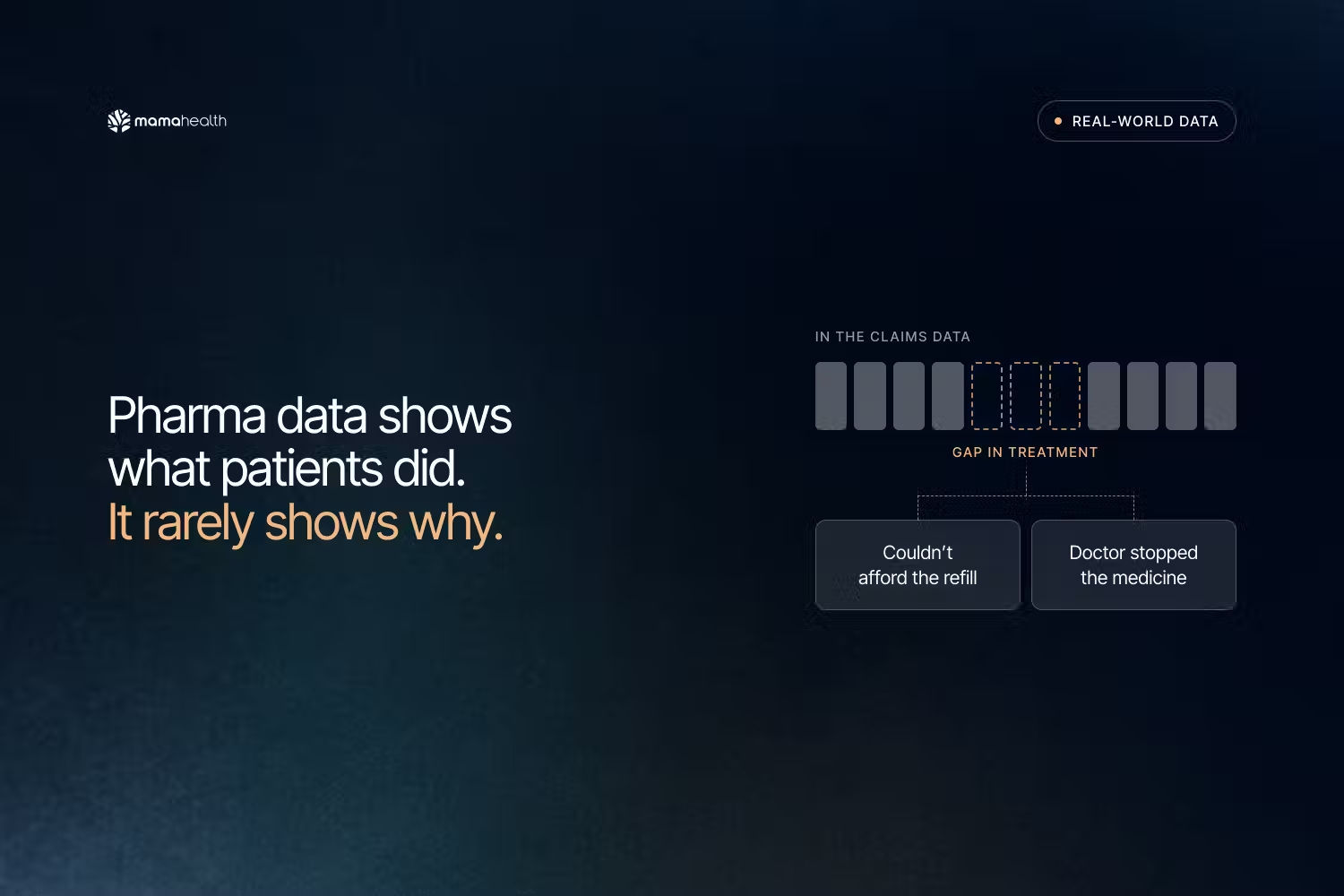
A patient who cannot afford a refill and someone whose doctor has stopped their medicine can both appear in a claims analysis as a gap in treatment. One may need help navigating access. The other may already be following the right clinical advice.
For a pharma team deciding where to invest in patient support, those explanations lead to different decisions.
Claims, prescription records and electronic health records help teams understand treatment patterns and identify where a journey changes. Patient research and clinical notes can add context. The challenge is bringing the relevant explanation into the decision before an observed pattern becomes an assumption about what people need.
A recorded gap is the beginning of an investigation
In a 2019 study in the Journal of Managed Care & Specialty Pharmacy, researchers examined claims and interviews for 1,425 Medicaid patients in North Carolina. They found that 28% of the 2,936 records flagged as nonadherent in prescription claims were reclassified following patient interviews. People reported stopping medication on their prescriber’s advice or obtaining it through another channel.
That figure relates to a specific population and method, and the interviews relied on self-report. But it illustrates a practical problem: a flag that helps locate a possible treatment gap does not, by itself, establish the reason.
A 2024 study published in Arthritis Care & Research adds another perspective. Researchers reviewed clinical notes for 60 prescriptions across 50 patients whose prescribed biologic or targeted therapy had no subsequent claim within six months. The documented explanations included insurance denials, unaffordable out-of-pocket costs, fear of side effects and medication supplied through patient assistance programs.
Some of the missing context was already in the clinical record. Bringing different sources together made the apparent gap more interpretable.
For commercial and patient engagement teams, investigating those explanations can change the response they choose.
The explanation changes where teams should invest
Consider a team trying to understand why people are not starting a prescribed treatment.
If patients describe difficulty completing access paperwork, that points toward reviewing enrollment support and navigation. If they describe uncertainty about treatment benefits or risks, the team has a different question to address through balanced education and support for conversations with their clinician. If treatment has already started through another supply route, the immediate issue may be how the data captures initiation.
These are decisions about where to put resources, what to measure and which problem to solve.
The same discipline applies before launch. A team may know how many people reach specialist care while still needing to understand what delayed them. Did they struggle to recognize symptoms? Find an appointment? Understand a referral? Each explanation suggests a different place to investigate or improve support.
Patient accounts help teams form more specific hypotheses. Those hypotheses can then be assessed alongside clinical, claims and research evidence, with success measures that fit the intervention.
Leave room for an answer you did not expect
The way a question is asked affects what a team can learn.
“Why did you stop treatment?” assumes that treatment stopped. “What happened after the prescription was written?” leaves room for a different account.
The FDA’s guidance on identifying what is important to patients recommends avoiding leading questions and assumptions about what participants think or feel. It describes qualitative methods as a way to understand experiences, priorities and perspectives in people’s own words.
Although that guidance concerns drug development, the methodological principle is useful for teams investigating patient barriers: questions should allow the explanation to emerge.
Credibility also depends on how those explanations are interpreted. A reported concern is evidence of what someone experienced or believed. Establishing causation, estimating how common that concern is, or demonstrating that an intervention works requires an appropriate study design.
Teams need to know who contributed, how they were recruited, which journey stages they represent and how responses were analyzed. That context determines whether a finding should guide further research, inform content development or support a broader strategic decision.
Give people a reason to keep the conversation going
There is a patient benefit to getting this right. Someone struggling with the cost of treatment should be able to explain that difficulty and receive information relevant to it. Someone uncertain about a treatment discussion may want help preparing questions for their next appointment.
A useful conversation makes space for both.
It also creates an opportunity to revisit what remains unresolved. An initial question about starting treatment may be followed by a concern about fitting it around work, or uncertainty after a consultation. Returning to those experiences can reveal how needs change and whether the original question was answered.
For pharma teams, this creates a reason to connect patient engagement with learning. An interaction can support a concrete next step, such as preparing questions for a doctor, while helping teams understand which concerns their education or support should address.
Bring the patient’s explanation into the next decision
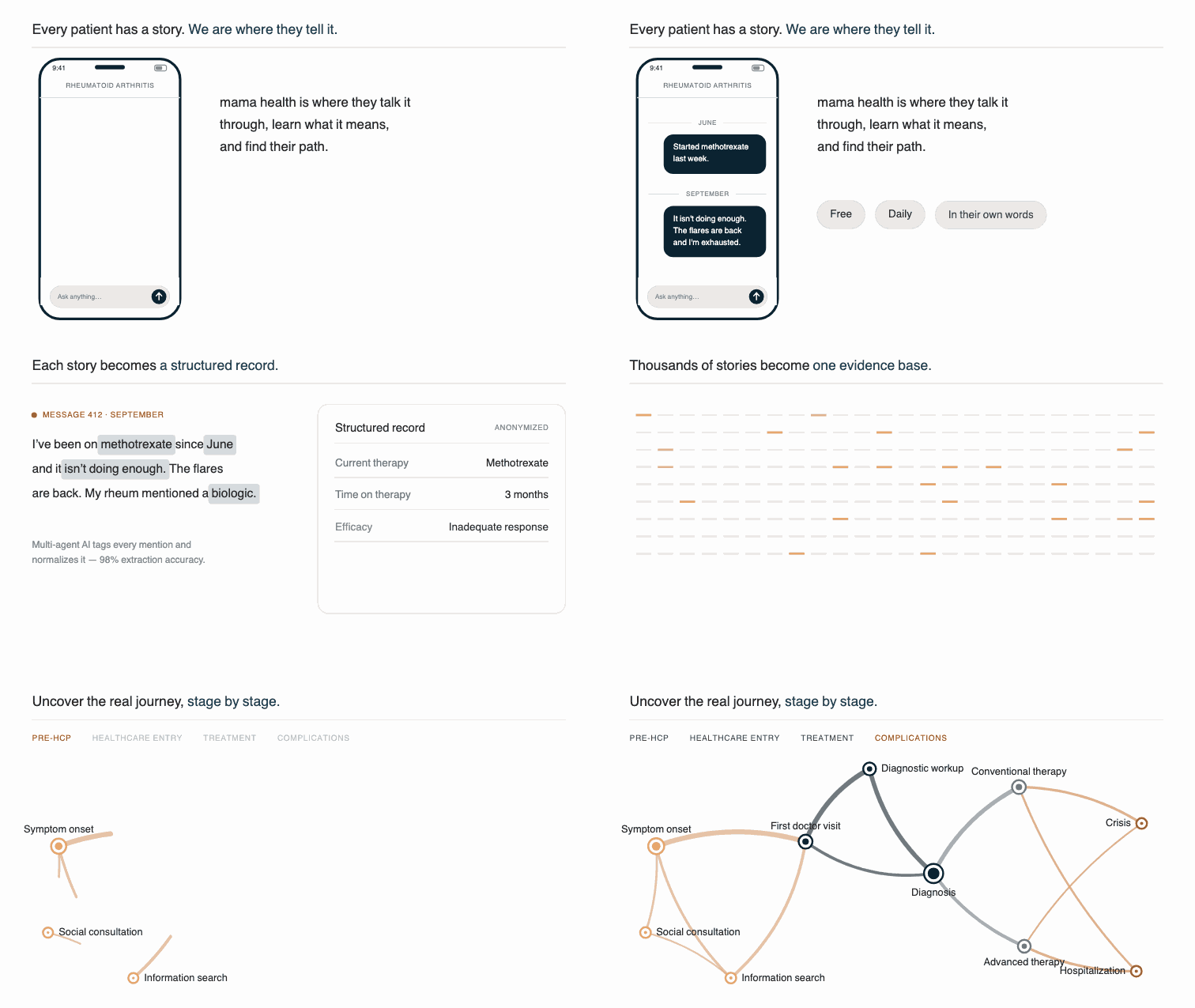
At mama health, we connect these activities. Campaigns built around an indication and market bring relevant patients into our free app, where they get ongoing support with their health questions. They can explore treatment information, learn from other patients’ experiences and prepare for appointments.
With consent, conversations are anonymized and aggregated for analysis. AI helps structure them, supported by medical and scientific review. Teams can examine the source context and cohort sizes behind findings, and revisit questions as new conversations become available.
Used alongside existing evidence, these patient signals can help teams decide which concerns to address in education, where support needs to change and which questions deserve further investigation.
The next time a team sees a treatment gap, a switch or a delay, there is a useful question to ask before committing to a response: what have the people behind this pattern told us about what happened?
Check your indication to explore the patient questions mama health can help your team answer.