What pharma can learn when patients come back

What pharma can learn when patients come back
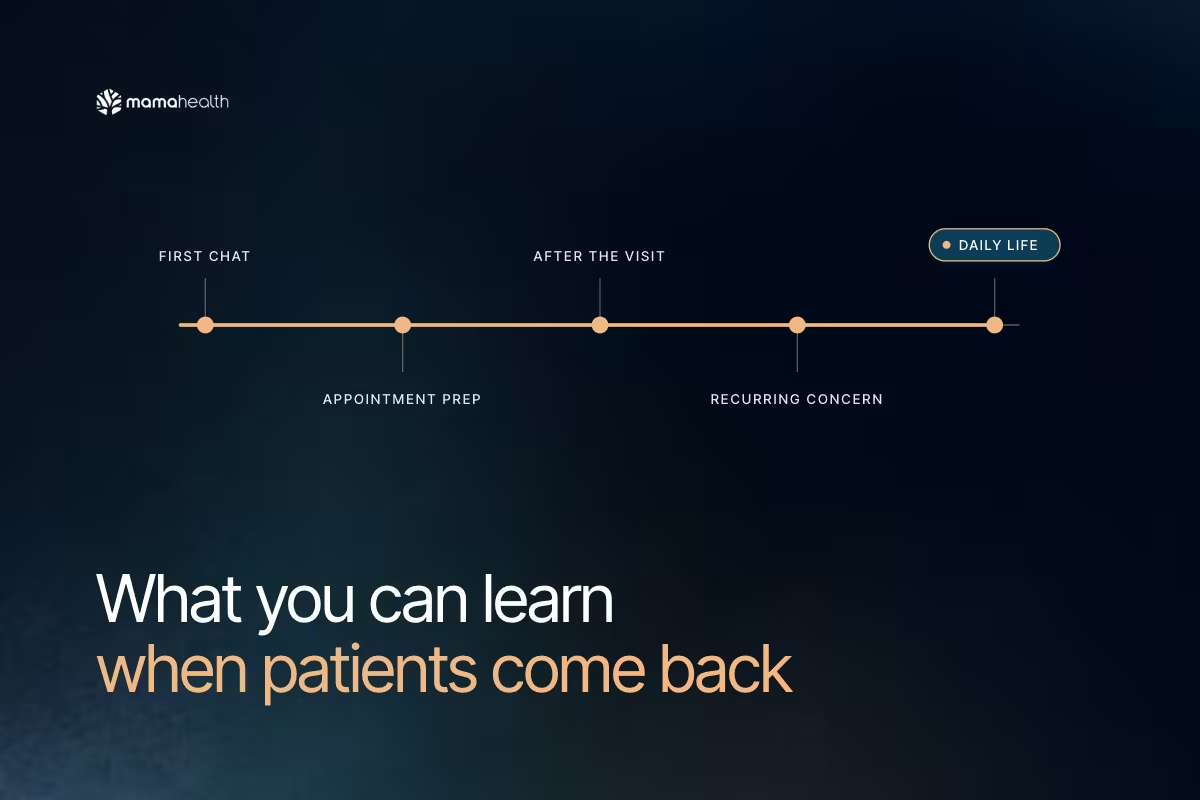
A first conversation might explain why someone is worried about treatment. A later conversation can reveal whether that concern is still there, what their doctor clarified and what has become difficult in daily life.
At mama health, around 60% of recently joined users with a diagnosis who have used chat come back.
For pharma teams, those return visits create an opportunity to understand the patient journey as it develops. When people continue sharing their experiences, teams can learn which needs persist, which change and where education or support could help.
Patient needs change over time
Living with an indication brings questions at different points. Some become less relevant as a person gains experience. Others remain important.
A two-year study of 202 people with hypertension illustrates this. Researchers found that information needs decreased significantly in several areas, while needs relating to medication and risks or complications did not show the same significant decline. Springer Nature Link
The practical implication is that support needs to stay responsive. The information someone wants at the beginning may differ from what they need months later.
An unfamiliar term calls for a clear explanation. An upcoming specialist visit may call for help organizing questions. A concern that keeps resurfacing may deserve a different explanation or further discussion with a clinician.
Understanding the moment helps make the next interaction useful.
Give each visit a useful purpose
People use the free mama health app to ask health questions, explore treatment information and prepare for appointments. They get ongoing support as their questions and circumstances change. Patient engagement and intelligence for pharma
Consider someone who is unsure how to describe a difficult experience to their doctor. A conversation can help them put it into words and organize the questions they want to ask. If they later share what happened at the appointment, the next exchange can build on that account.
That continuity gives people somewhere to revisit a concern, work through information they have received and prepare for a practical next step. It also creates opportunities to understand how their experience unfolds.
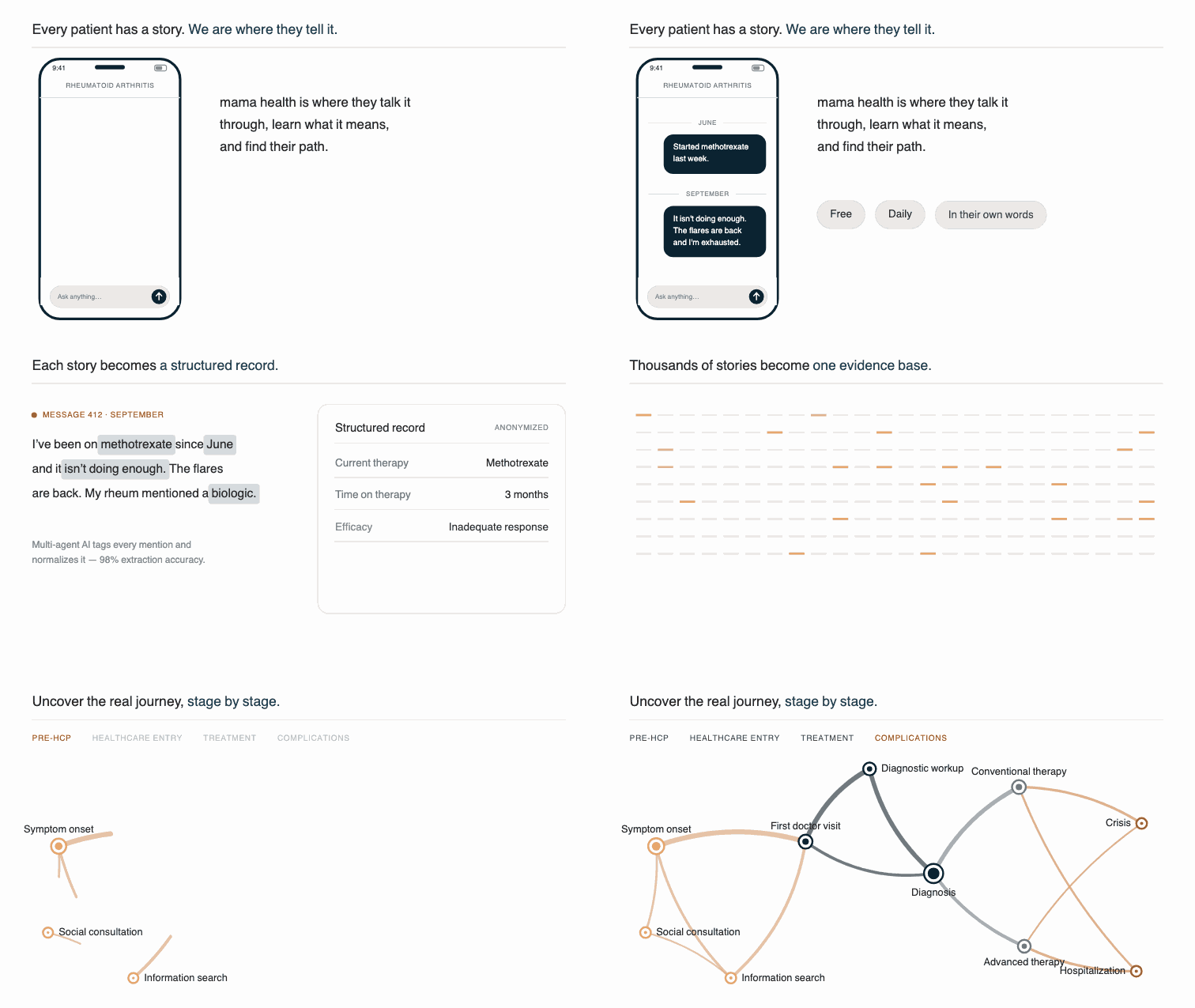
What continued conversations can reveal to pharma
At mama health, direct patient conversations are anonymized and aggregated with consent, then structured into patient intelligence. Medical and scientific review supports the analysis, while source context and patient counts help teams assess a finding. Patient engagement and intelligence for pharma
When people continue sharing, those conversations can help pharma teams investigate:
- Concerns that persist. Recurring questions about treatment can point to explanations that need closer attention.
- Needs that emerge later. Accounts of difficulty fitting treatment into everyday life can inform practical support.
- Experiences after an appointment. What people say was explained, and what remains unclear, can inform preparation and follow-up resources.
These are different needs, with different responses. A team might revise an explanation of treatment benefits and risks, develop more useful appointment prompts or investigate a recurring practical barrier.
The patient perspective adds context to existing clinical, claims and research data. It helps teams understand what people were trying to resolve around an event and what they report happening afterward.
Look at what happens after the return
A return rate is a starting point for understanding engagement. Its value becomes clearer when teams examine what people do during those visits and what they tell us.
A review of digital engagement research describes engagement through both behavior and experience, shaped by the intervention and the context in which it is used. That supports looking at the substance of an interaction alongside its frequency. A return rate alone does not establish improved adherence or health outcomes. PubMed
For pharma, the opportunity is to keep learning as patients’ questions develop. That can help teams recognize where education needs to be clearer, where practical help is missing and which concerns deserve further investigation.
The work begins with making each conversation useful to the person having it. With consent and careful analysis, what they share can also inform better support for others navigating similar experiences.
Check your indication to see how mama health can help your team understand what patients need next.