How a global oncology leader showed that letting patients keep their existing medications is a benefit worth talking about

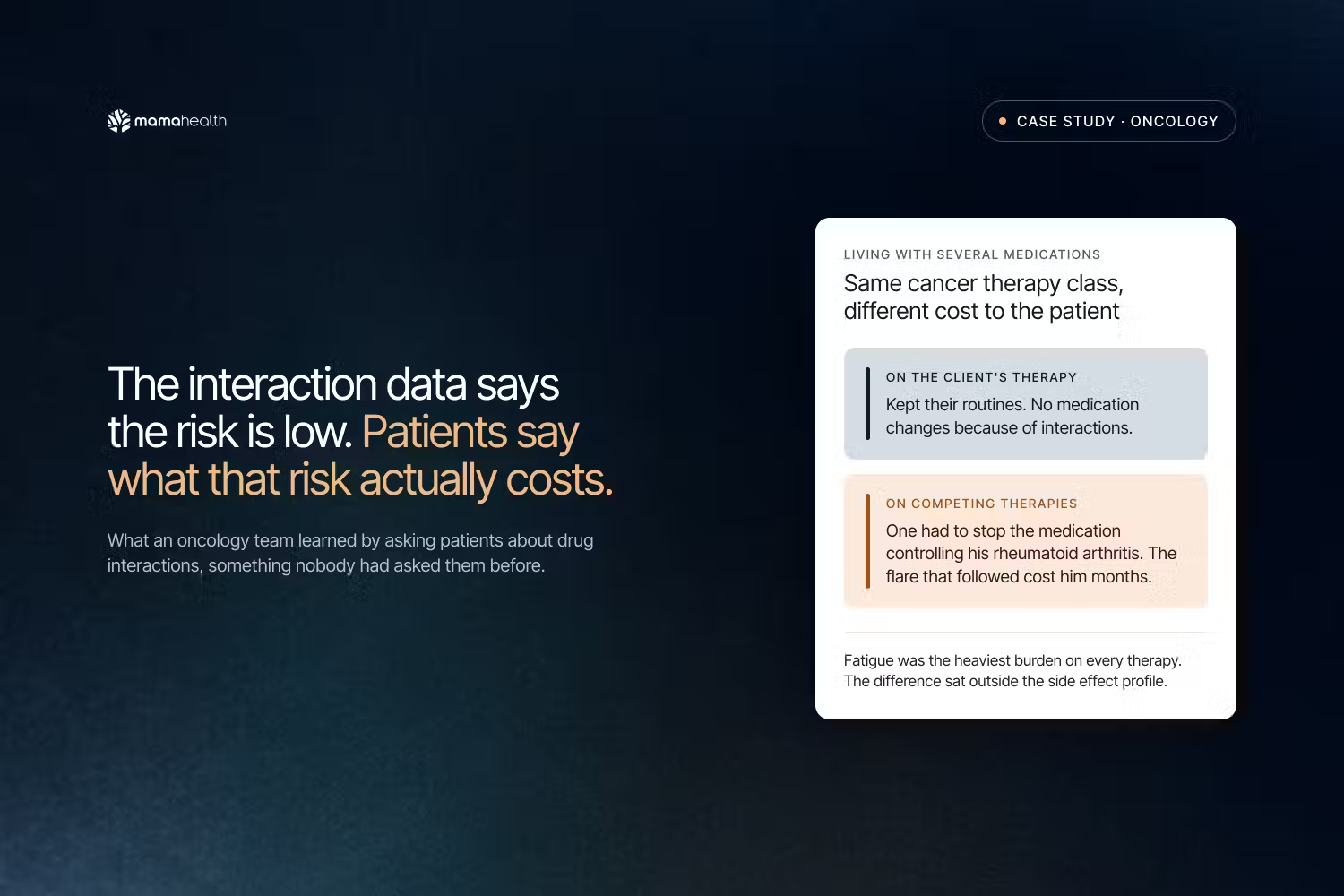
- Nothing had to change: patients on the client's therapy reported no medication changes from interactions.
- A stopped medication: on competing therapies, patients gave up drugs they'd relied on for years.
- Same side effects: fatigue was the heaviest burden patients reported, on every therapy in the class.
About the client
The client is a global pharmaceutical company and market leader in its therapy area, working with mama health on a therapy for patients living with advanced cancer. The therapy competes with several established alternatives in the same class. They all work, and they're all competing for the same prescribers.
The challenge
Patients with this type of cancer are rarely managing only cancer. Most are older, and most arrive at diagnosis already on a stable set of medications for blood pressure, cholesterol, diabetes and other conditions they've lived with for years. When cancer therapy starts, drug interactions can force those medications to be adjusted, interrupted or stopped.
The client's therapy has a low interaction profile, so patients on it generally keep taking what they were already taking. Clinically this is well documented. Commercially it wasn't doing anything, because nobody could show what it meant to a patient.
A survey couldn't answer that. Asked directly whether drug interactions matter, a patient will say yes, because the question tells them it does. The client needed to know whether patients bring this up on their own, unprompted, when they describe their lives.
The solution
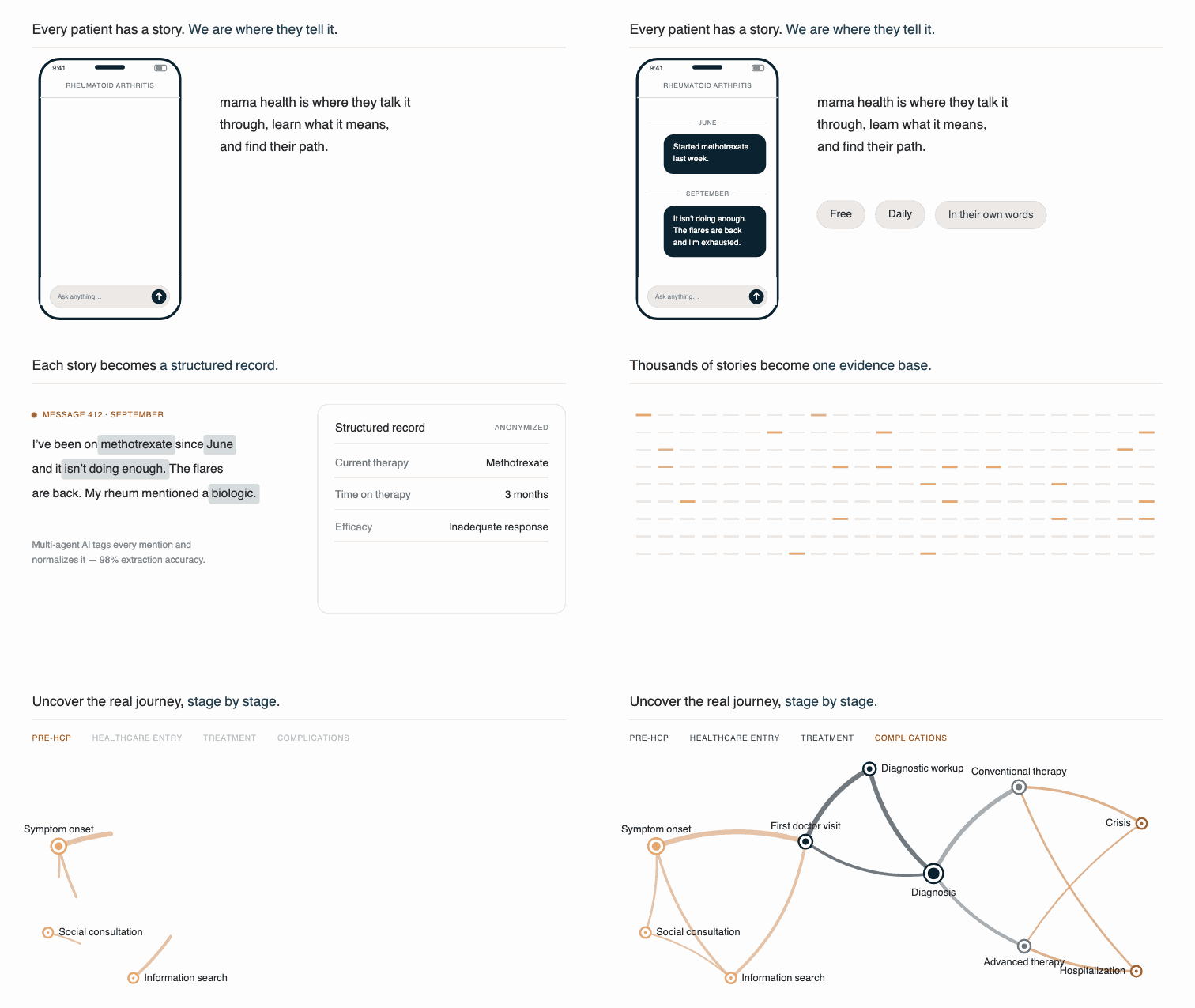
mama health ran AI-moderated conversations with patients living with the condition, in their own language, on their own time. There was no questionnaire about drug interactions. Patients talked about diagnosis, treatment, side effects, daily routine and what they were finding hard, and medication changes came up where they mattered to the patient.
The conversations were structured and de-identified into the Patient Journey Analytics Platform, where the client can see the cohort by stage, by treatment combination and by molecule, with the patient's own words behind every number.
The client learned not just how many patients had to change an existing medication, but how those patients described it happening to them.
In the patient's words
"The fatigue is crushing me, I feel like I could sleep all the time. Will my quality of life ever improve once the therapy is finished?"
Key insights
Patients on the client's therapy kept their routines
Those with other conditions reported no medication changes because of interactions. One described his clinical team checking every one of his medications against the new treatment and confirming nothing had to change.
Patients on competing therapies didn't, and it cost them
One had to stop the medication controlling his rheumatoid arthritis to avoid an interaction. The flare that followed made it harder for him to work and, in his words, harder to live.
Most of the cohort had something to lose
The large majority were managing several medications alongside their cancer therapy, most often for blood pressure, cholesterol and diabetes.
Side effects didn't separate the class
Fatigue was the heaviest burden patients reported, on every therapy. When every option in the class carries the same weight, a difference outside the side effect profile is worth a lot.
Core insight
For an older person absorbing a cancer diagnosis, keeping the rest of their medications the way they were is one less thing being taken from them. Patients feel it, and they rarely get asked about it, so it almost never shows up in the evidence a medical team can use.
The interaction data can tell a physician the risk is low. It can't tell them what that meant to the patient who kept their blood pressure medication, or to the one who had to stop their arthritis medication and lost months to the flare. Both of those came from patients who were never asked about drug interactions in the first place.
Why it matters
For medical affairs
There is now a patient-grounded story to bring to oncologists and other specialists that starts from what the patient said rather than from the label.
For market access
The quality of life argument is built on patient testimony, at scale, rather than modeling.
For the brand team
This is a position a competitor can't copy without changing its molecule.